When You Have to Fire the Contractor (And What It Taught Me About Making Art for People I Care About)
Our basement renovation started with great reviews and high expectations. What followed was months of delays, an unfinished floor, and a hard lesson about why clear agreements matter — not just when hiring contractors, but when commissioning artwork as well.
You know that feeling when you’re in a situation that’s clearly not working, but you keep hoping it’ll turn around? You give it one more chance. Then another. You tell yourself maybe next week will be different.
That was us with our basement renovation.
And honestly, looking back, it had all the hallmarks of a really bad relationship: a great first impression, early promise, and then a slow unraveling of excuses that somehow kept arriving before any actual progress did. It took a nudge from a family member and a coworker — people who could see it more clearly than we could from the inside — before my husband finally had the conversation we’d been dreading.
He took his tools. He left. The floor was still a mess.
And I learned more from that experience than I ever expected to.
It Started With a Good Review
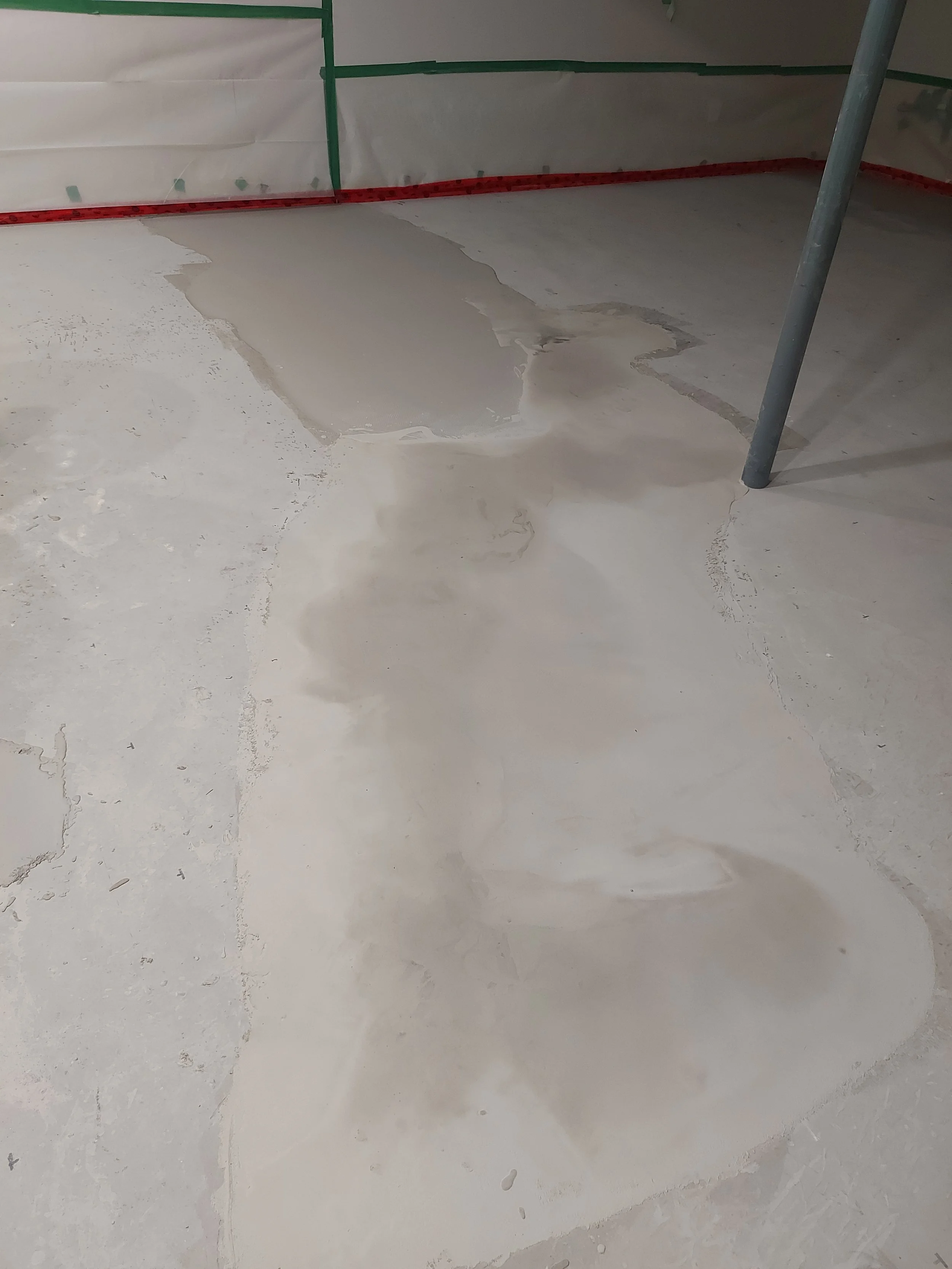
Adding more leveler to lower areas.
We weren’t naive going into this. We’ve had work done on our home before — the roof, the plumbing, painting from someone a realtor recommended — and it had always been reasonably smooth. We’re not the kind of people who just hand over a key and hope for the best.
So when we found this contractor, I did my homework. With 85 Google reviews, it sits at a 4.8 rating. That’s genuinely impressive. I felt good about it.
What I didn’t know — what I couldn’t have known from a rating alone — (what I deduced from the comments) was that the company had recently changed hands. Those glowing reviews were for the previous owner’s work. The reputation had transferred. The craftsmanship had not.
That detail changed everything.
The Floor That Never Got Level
The job involved self-leveling compound for the basement floor — which sounds straightforward, but apparently requires very specific prep work, the right materials, and people who actually understand how those materials behave. The grinding that needed to happen first? Not enough of it. The product needed? Significantly underestimated. The workers he brought in seemed unfamiliar with what they were working with, even if he wasn’t.
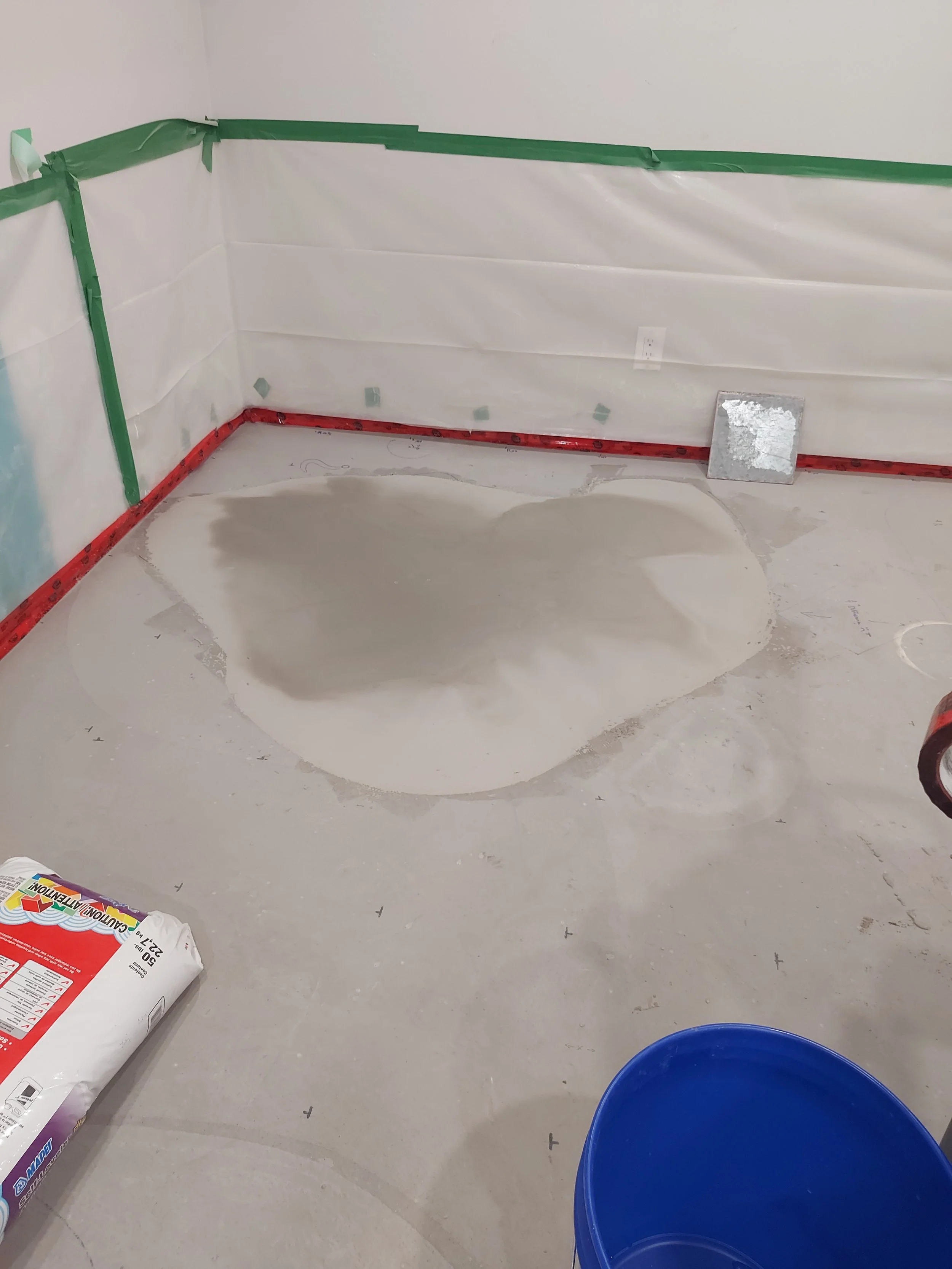
Adding even more leveler to lower areas.
He didn’t charge us more for his miscalculation, which I appreciated. But he also didn’t finish the job. Weeks stretched on. Excuses arrived right on schedule, even when the work didn’t. We ended up paying roughly 75% of the total before we finally accepted that the remaining 25% of the project simply wasn’t coming.
Firing someone is hard, even when it’s the right thing to do. We’re not confrontational people. But sometimes you have to look at an uneven floor, a long trail of unkept promises, and just… let go.
The Part That Restored My Faith in People
Here’s where the story gets warmer, I promise.
My husband’s Dungeons & Dragons group showed up. On weekends. With a diamond-head grinder and a genuine willingness to help. What a professional couldn’t finish, a handful of generous, good-hearted friends are now working through together — filling in the floor with self-leveler, grinding it down properly, doing it right.
Spring break is just around the corner. Nine days off. The flooring is already purchased and waiting. If everything goes the way we’re hoping, the basement floor will be finished by the end of March.
I am so grateful for those people. More than I can say.
Why I Keep Thinking About This in Terms of Art
Here’s the thing — I haven’t been able to shake this experience, and I think it’s because it keeps connecting, in my mind, to something I feel really strongly about in my own creative work.
I’m an artist. I take commissions. And the through-line between a basement renovation gone wrong and a commissioned painting is the same thing at its core: when there’s no clear agreement, everyone suffers.
I’ve done two commissions with proper written contracts, and both of them were genuinely lovely experiences — for me and for the people I was painting for. Not because contracts make things cold or transactional, but because they do the opposite. They clear the air. They mean that when we start working together, we both already know the scope, the size, the timeline, the cost, the deposit structure, and what the communication will look like along the way.
There’s no guessing. There’s no “I thought you meant…” There’s just two people, on the same page, working toward something beautiful.
The One Thing I’ve Learned About Commissions

One thing I’ve come to understand — sometimes the hard way — is that a successful commission starts before I ever pick up a brush. It starts with the reference image.
I can’t provide the vision. I’ve tried to do it in the past, but I think that there is something lacking. That has to come from you, the person who wants the painting. When a client comes to me with a clear, specific image of what they’re hoping to capture, everything flows from there. I know what I’m working toward. You know what you’re getting. The painting becomes a real conversation between us rather than a guessing game on my end.
It sounds simple, but it changes everything.
Where Things Stand Right Now
I’m not currently open for commissions — life is genuinely full at the moment, and I’ve had to turn down a few inquiries since the summer, which is never easy when I know how meaningful a commissioned piece can be. It’ll be another year or so before I’m ready to open that door again.
But when I do, I’ll be coming to it with a lot more clarity about what makes those relationships work — and a very deep appreciation for the value of a solid agreement between two people who are trusting each other.
Also a much more level floor.

A Few Questions I Get Asked (and the Honest Answers)
Why do you use contracts for art commissions?
Because they protect both of us. A contract means we’ve agreed on the size, subject, timeline, price, and deposit before I touch a brush. It’s not about distrust — it’s about respect. When expectations are clear from the start, the creative process can actually be enjoyable.
How do art commissions usually work?
When I’m open for commissions, I ask for a 50% deposit upfront, a specific reference image provided by the collector, and clear details on size and subject. I communicate regularly throughout the process — sharing progress images and checking in — so there are no surprises at the end.
What’s the biggest mistake people make when hiring a contractor?
Trusting reviews without asking who, specifically, will be doing the work. Ratings reflect past performance under past ownership. Always verify who is actually showing up to your project — and get the agreement in writing before anyone picks up a tool.
Have you had a home project — or a creative project! — go sideways before finding its way back?
I’d love to hear about it in the comments.
And if this resonated, feel free to share it with someone who might need it today. ♥