Museums do not collect “good paintings.” They collect evidence of thinking.
Written by Vanessa Corrigall, ChatGPT 5.2 + Perplexity AI
Most artists are trained in the elements and principles of design—composition, contrast, balance, rhythm. These frameworks explain how images are built. What they do not explain is why certain bodies of work enter museum collections while others, equally skilled, do not.
In institutional contexts, work is rarely evaluated on the strength of a single image. Curators look for seriousness at the level of practice. They consider how an artist thinks over time, how the work behaves across space, and whether meaning unfolds rather than concludes. This logic is embedded in museum writing and exhibition culture, even when it is not clearly articulated.
Institutional value is not built on novelty or perfection. It is built through depth, restraint, embodied inquiry, and spatial coherence.

1. Depth Over Variety
Museums tend to prioritize depth over stylistic variety. Returning to defined conditions over time signals that a practice is still unfolding. It suggests that the work is not exhausted by a single project or aesthetic shift.
A thematic “series” implies a beginning and an end. A sustained inquiry implies something else entirely: a practice that deepens through repetition and continues generating insight. Art historian James Elkins has written about this kind of extended studio investigation, emphasizing duration over novelty.
Hiroshi Sugimoto’s Seascapes, ongoing since the 1980s, demonstrate how repetition can produce philosophical depth. Agnes Martin’s grids gain power through cumulative attention rather than dramatic variation. In both cases, institutional relevance emerges not from constant reinvention, but from committed return.
When an artist works within defined conditions for years, museums read this as evidence that the work continues to think.
2. Quiet Confidence
Institutional spaces often respond to quiet confidence rather than spectacle. Minimal gesture and restrained presentation suggest that the work does not need to persuade in order to justify itself.
Susan Sontag argued for presence over explanation. Michael Fried distinguished between absorption and theatricality. In both frameworks, authority comes from work that holds itself rather than performs for the viewer.
Rineke Dijkstra’s bathing portraits illustrate this principle. Meaning accumulates slowly, without overt drama. The figures do not demand attention; they sustain it.
In museum contexts, restraint signals seriousness. It suggests that the work can remain open. Rather than prescribing interpretation, it allows engagement to unfold.

3. Practice as Thinking
Museums increasingly treat art as a mode of thinking rather than illustration. Meaning is not simply attached to the image; it emerges through repetition, material engagement, and duration.
Phenomenology—particularly Maurice Merleau-Ponty’s writing on embodied perception—helps frame this idea. Knowledge is produced through lived experience. In studio practice, this often appears as disciplined return, sustained labor, and attention to material conditions.
When meaning emerges through repetition and material rather than narrative explanation, the work is understood as research. The artist is not simply producing images but thinking through making.
This is one reason institutions value embodied inquiry. It transforms art from decoration into evidence of sustained investigation.
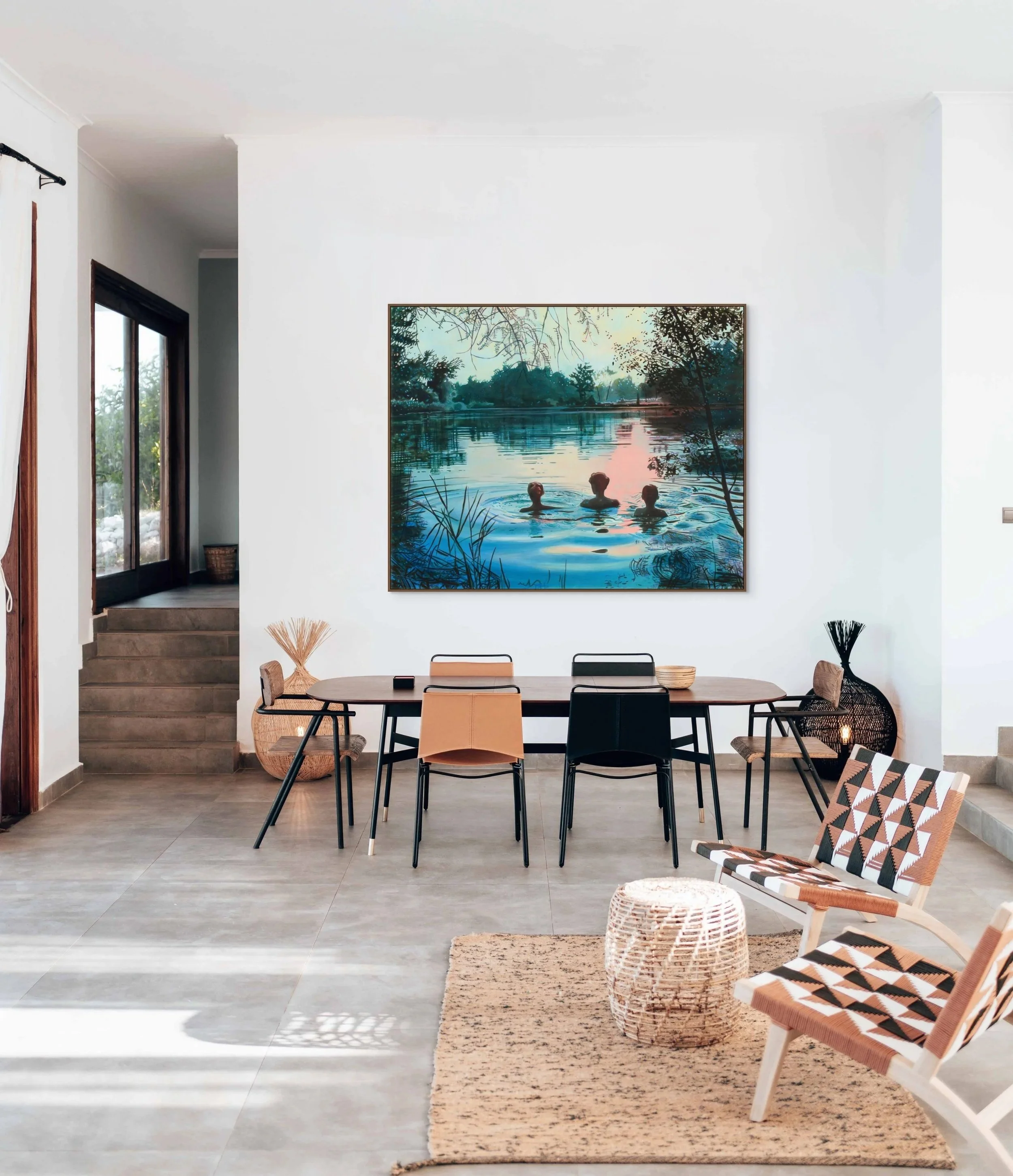
4. Cohesive Installation
Exhibitions are not portfolios. They are environments. Museums consider whether work can relate clearly across space and maintain coherence beyond a single image.
Spatial intelligence means that repetition strengthens rather than weakens the work. Variation deepens meaning rather than diluting it. Viewers can move through the exhibition without fatigue or confusion.
Donald Judd’s installations and Hanne Darboven’s serial structures demonstrate how repetition can generate clarity rather than redundancy. Paul O’Neill has described exhibitions as discursive spaces in which relationships between works are as important as the works themselves.
When pieces speak to each other across walls, the practice demonstrates endurance. It shows that the work can live beyond a single object.
How Institutional Value Is Built
| Institutional Signal | What It Looks Like in Practice | What It Suggests About the Work |
|---|---|---|
| Depth Over Variety | Returning to defined conditions over time | The work is still unfolding |
| Quiet Confidence | Minimal spectacle, restrained gesture | The work does not need to persuade |
| Practice as Thinking | Meaning emerges through repetition and material | The artist is researching through making |
| Cohesive Installation | Works relate clearly across space | The practice can live beyond a single image |
Why This Matters
Understanding this framework does not reduce art to a checklist. It clarifies why certain practices continue to circulate within institutions long after market attention has shifted.
Museums are not primarily searching for novelty. They are looking for practices that can hold attention over time, withstand repetition, and remain open.
For artists, this means working beyond individual images toward practice as evidence. For collectors, it offers insight into why restraint, consistency, and depth often signal long-term cultural value more reliably than spectacle or stylistic range.
Institutional relevance is rarely about being louder. It is about sustaining thought.
Suggested Further Reading
Susan Sontag, Against Interpretation
Hans Ulrich Obrist, Ways of Curating
Paul O’Neill, The Culture of Curating and the Curating of Culture(s)
Maurice Merleau‑Ponty, Phenomenology of Perception
Bill Viola, Reasons for Knocking at an Empty House
October journal (various issues)
Frequently Asked Questions
Q: Why do museums value sustained inquiry over thematic series?
A: Sustained inquiry signals long‑term engagement and depth, suggesting that the work will continue to generate meaning over time — a key factor in institutional relevance.
Q: Can expressive or narrative work be museum‑worthy?
A: Yes. Expressive, narrative, or spectacular work enters museums regularly, but institutions often prioritize practices that invite open engagement rather than prescribing a fixed emotion or interpretation.
Q: How can artists make their studio practice reflect embodied knowledge?
A: By approaching art‑making as inquiry: returning to specific conditions, valuing repetition and duration, and treating material decisions as ways of thinking rather than merely illustrating ideas.
Q: What does spatial intelligence look like in exhibition?
A: It appears as a balance of repetition and variation, where works speak to each other across space, and viewers can move through ideas with clarity, rhythm, and a sense of deepening rather than simple accumulation.