Critical Thinking Didn't End With AI
28 mins - Read
I gave my high school design students what looked like a simple assignment for the module - DES2060 - Evolution of Design: to research a set of inventions from images, name the invention, and find out who invented it, when, and why. Three of the inventors on the list were causing serious problems. I almost took them off, because they were so confusing.
Ruth Graves Wakefield and the chocolate chip cookie (June 17, 1903 – January 10, 1977)
Sarah "Tabitha" Babbitt and the circular saw — although it's contested that she invented it at all. She doesn't have a verified picture anywhere. (December 9, 1779 – December 10, 1853)
Mary Florence Potts and the cold-handle sad iron (November 1, 1850 – June 24, 1922)
Simple, right? Type the invention into Google (or reverse image search), grab a portrait, write it up.
Except the internet handed us a jumble of conflated information instead. And untangling it turned out to be a better lesson than the assignment itself.

The woman with two names
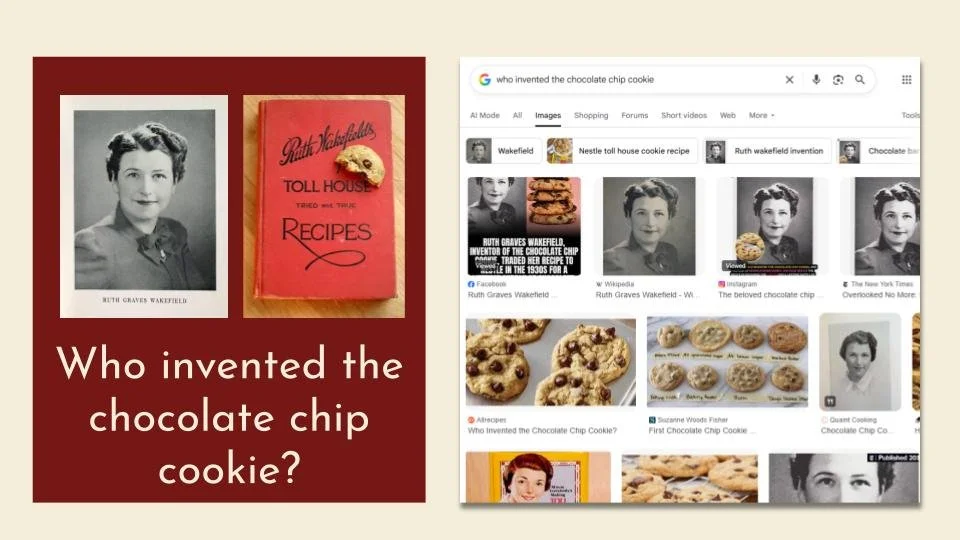
Search "who invented the chocolate chip cookie" and not much goes wrong. It's Ruth Graves Wakefield.
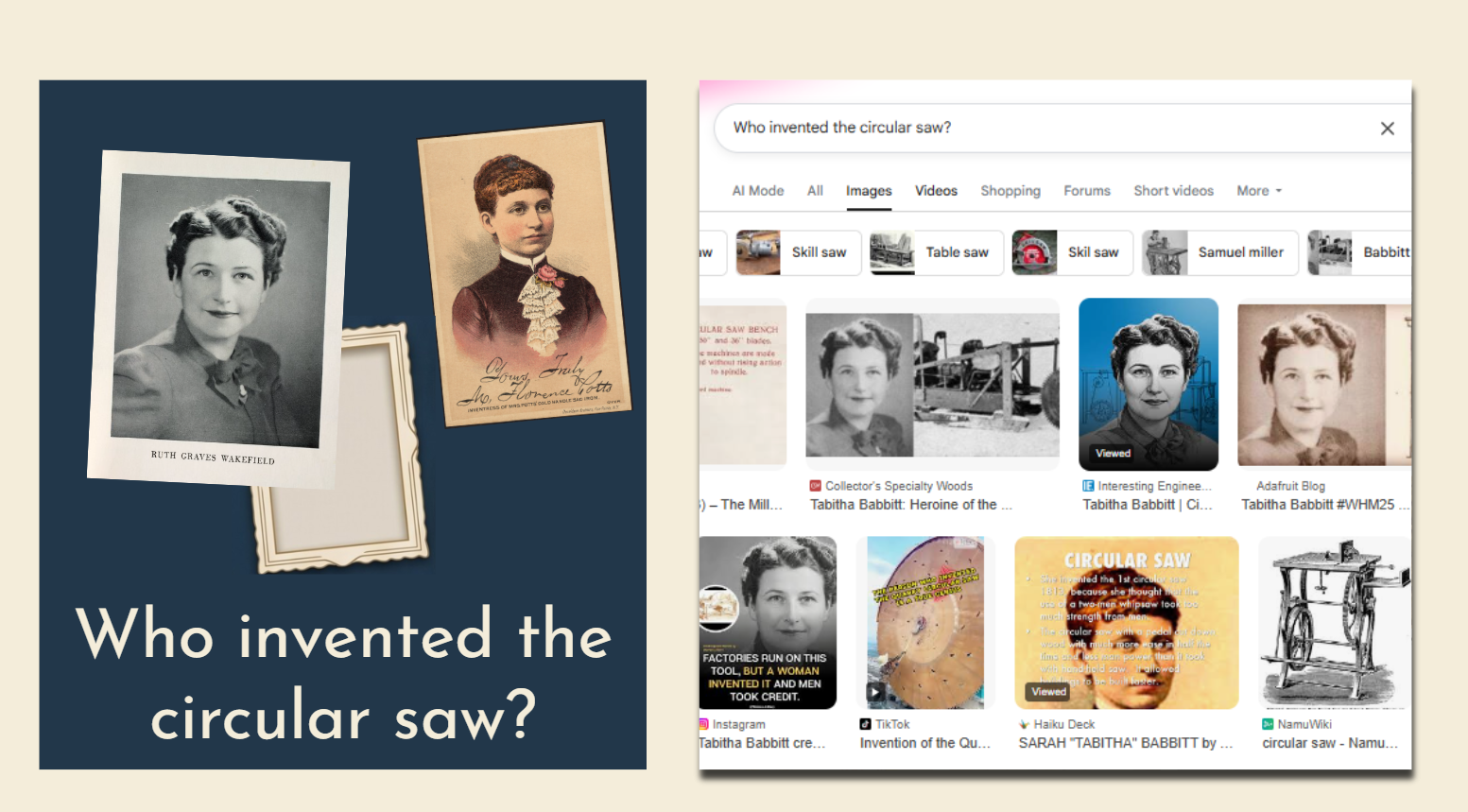
Now move to the next one. Search "Who invented the circular saw?"
It's Tabitha Babbitt. And hey — it may have been Samuel Miller, who patented a circular saw in England in 1777. But the images that come back have Tabitha Babbitt's name attached to them.
Search "Sarah Tabitha Babbitt" and Google Images returns row after row of the same portrait: a woman in her thirties with beautifully rolled, waved hair, soft studio lighting, a gentle smile. She appears on Instagram posts, LinkedIn tributes, International Women's Day graphics, even a hot-sauce blog wishing her a happy birthday.
Same woman as "Ruth Graves Wakefield." Same photograph.
Somewhere along the way, the internet gave Tabitha Babbitt — a Shaker toolmaker who died in 1853 — the face of Ruth Wakefield, the Massachusetts innkeeper who invented the chocolate chip cookie in the 1930s. The photo has been copied, reposted, cropped, colourized, and meme-ified so many times that it now outranks the truth.
And it goes one step further. If you search "Sarah Tabitha Babbitt," Mary Florence Potts shows up too — a third woman pulled into the same tangle. So how do you catch errors like this? You don't need a history degree. You need two hints and a few free tools.
Hint one: the camera is a timestamp
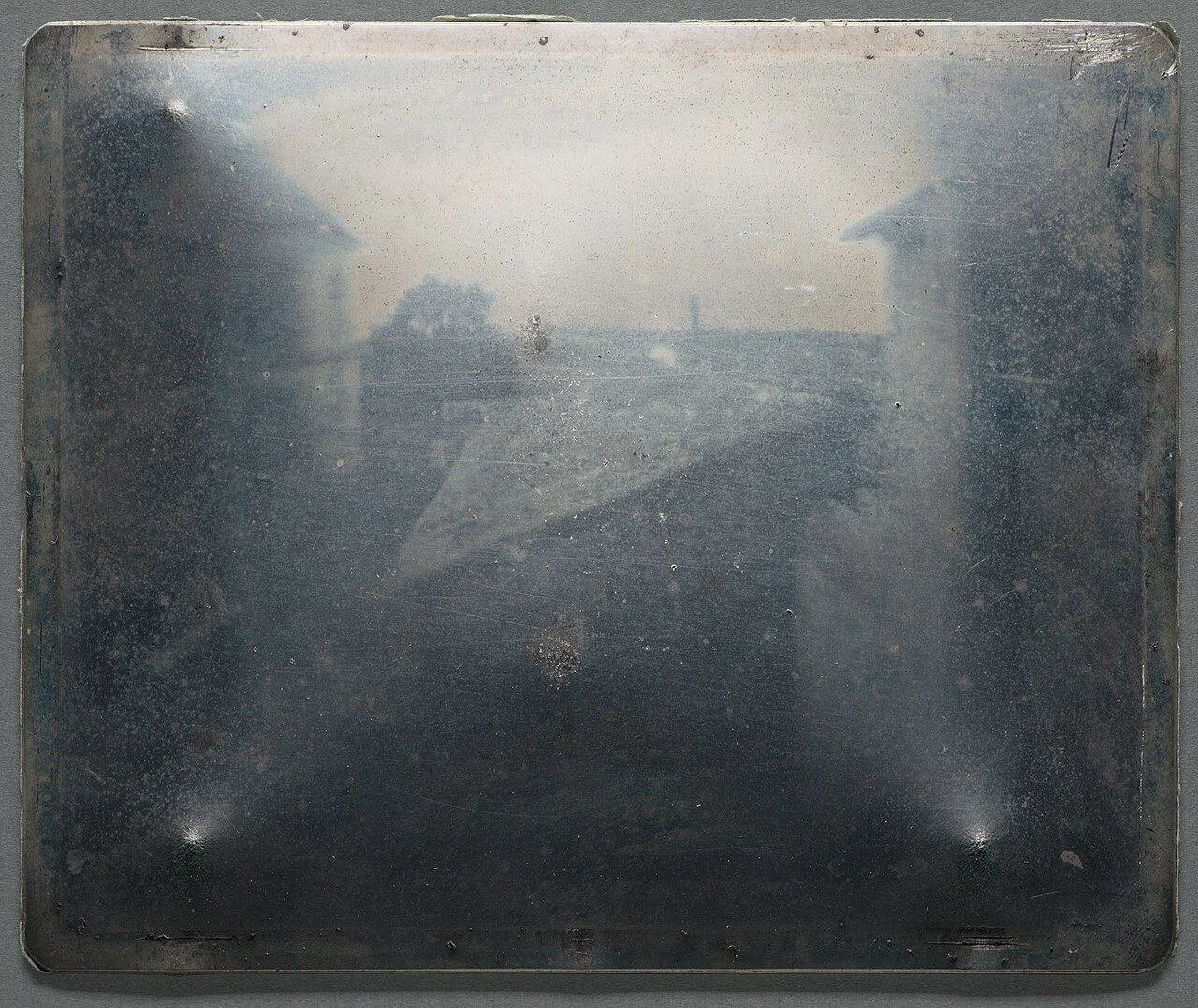
Photography has a birthday. The first permanent photograph, "View from the Window at Le Gras," was captured via Heliography in 1826 or 1827 by the French inventor Joseph Nicéphore Niépce — a blurry rooftop view from his estate in Burgundy, requiring an exposure so long the sun lit both sides of the courtyard. It would be another dozen years before the daguerreotype was announced to the world in 1839, and another decade or two after that before sitting for a portrait became something ordinary people did.
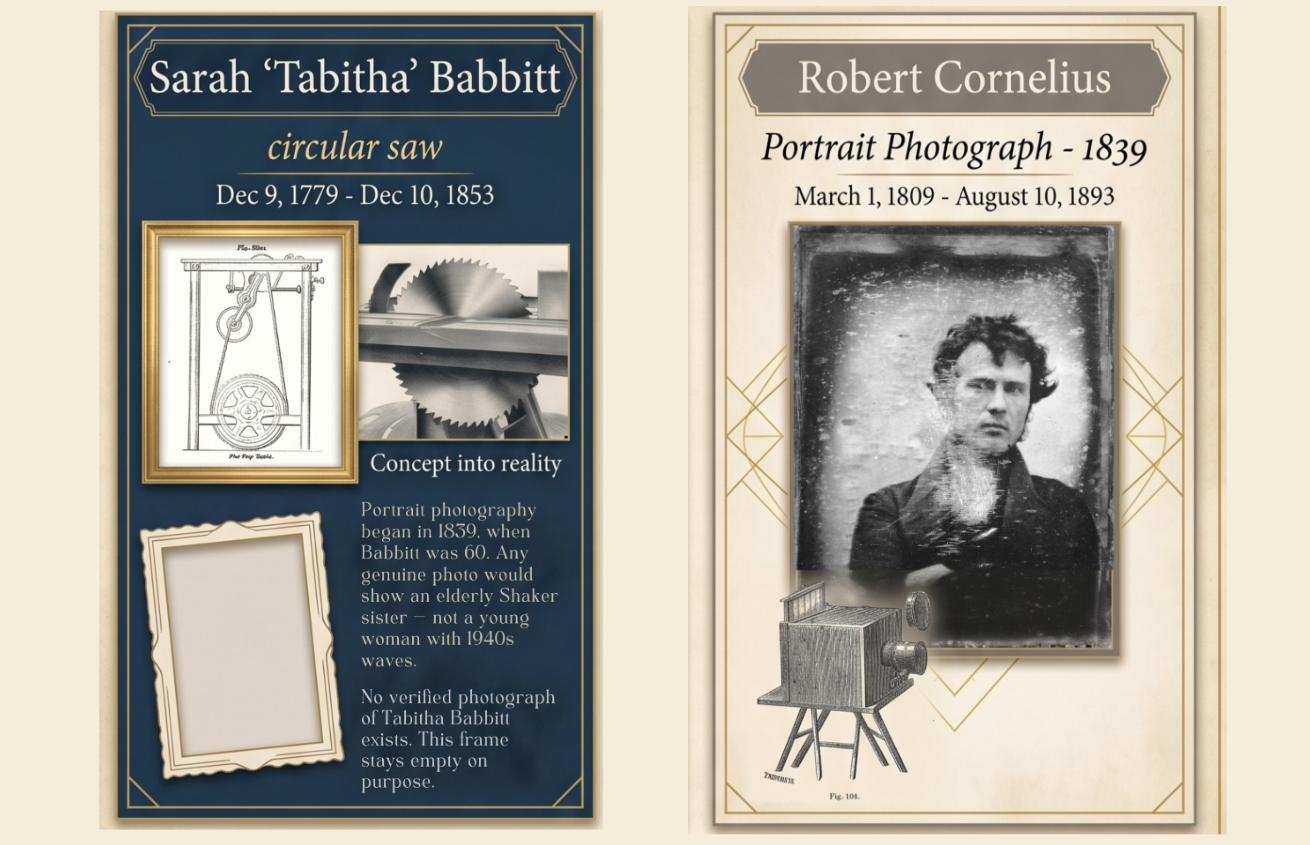
So the timeline gives us hard edges. Before 1826, no photographs existed at all — only paintings, engravings, and sculpture. Before Robert Cornelius made his self-portrait in 1839 (one of the first photographic portraits ever taken), no photographic portraits exist. And before mid-century, photography belonged mostly to the wealthy and the urban.
Tabitha Babbitt was born in 1779 and died in 1853. Let me say this plainly: no verified photograph of Tabitha Babbitt exists. When I did my own research, I couldn't find a single one — not in Shaker archives, not in museum collections, nowhere. If one had ever been taken, it would show an elderly woman, stiff and unsmiling, captured in the silvery, slightly ghostly look of an early daguerreotype. It would not show a relaxed, softly lit woman in her thirties.
That glamorous portrait isn't just unlikely. It's technologically impossible. The camera that could have taken it didn't exist during the years Babbitt looked like that.
This is the first question I want my students to ask of any historical image: could this picture have been made when this person was alive? The invention of the camera becomes a fixed point in time — a reference line. Anyone who died before roughly 1840 exists only in paintings, engravings, and sculpture. Full stop.
And there's a newer wrinkle. One search result showed a young woman in denim overalls posing proudly beside vintage machinery, labelled as Tabitha Babbitt. Look closely — it's AI-generated. Not a misattributed photo this time, but a face invented from nothing, dressed in a costume that's vaguely "old-timey," ranked in the results right alongside genuine archival material.
So in a single image search, my students met three kinds of pictures: a real photograph wearing the wrong name, period lithographs that check out, and a synthetic image with no referent at all. All presented in the same grid, at the same size, with the same implicit authority.
I use AI image generators in my own painting practice, openly, as source material — maybe someday I will write about why I think ai transparency is wanted from society (this has to do with norm lag). But this is the flip side of that argument: when nobody discloses, the search results become an archaeology problem, and we all need the digging skills.
The tools: reverse image search
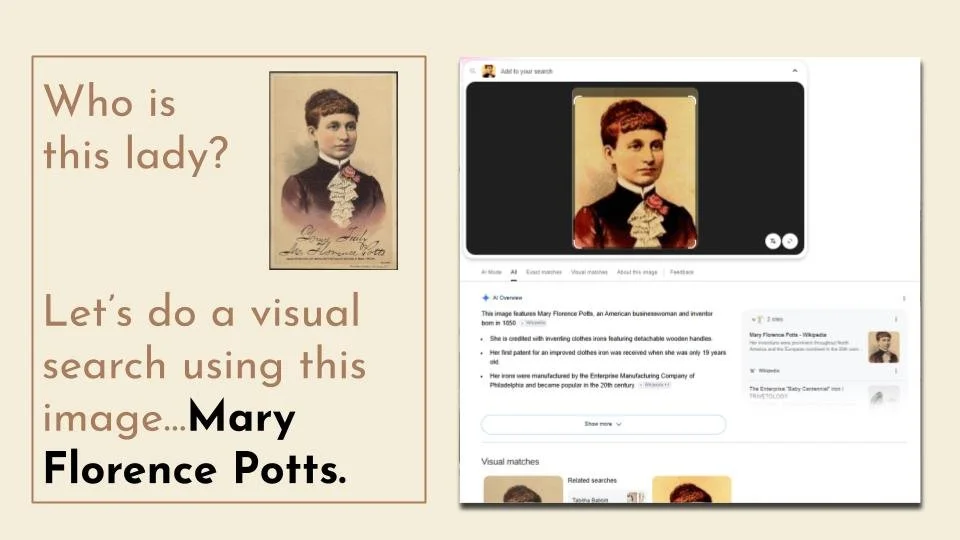
Here's where the detective work gets practical. Google's search-by-image feature (the little camera icon in the search bar, or right-click → "Search image with Google") lets you put an image in instead of words. From there:
Exact matches shows you everywhere the identical file appears online. This is how you trace an image back toward its origin — and crucially, you can check the publication dates of those pages. If the earliest appearance of a "historical" image is a 2019 Pinterest pin, that tells you something. The further back you can push the trail, and the closer you get to an archive, museum, or library, the more confidence you've earned.
Visual matches shows similar images, which is how I found the original Potts trade cards for sale on eBay and in the Alamy archive — physical Victorian advertising cards, scanned, with the printer's marks still visible. The trail led to a real, dateable object.
About this image (newer, and worth showing students) surfaces when Google first indexed an image and how it's been used across the web — a quick way to spot a picture that's been wearing several different names.
The principle underneath all of it: an image is a claim, and claims have sources. Who posted this first? When? Were they in a position to know?
Hint two: hair tells time
The second clue is hiding in plain sight, right on top of the subject's head.
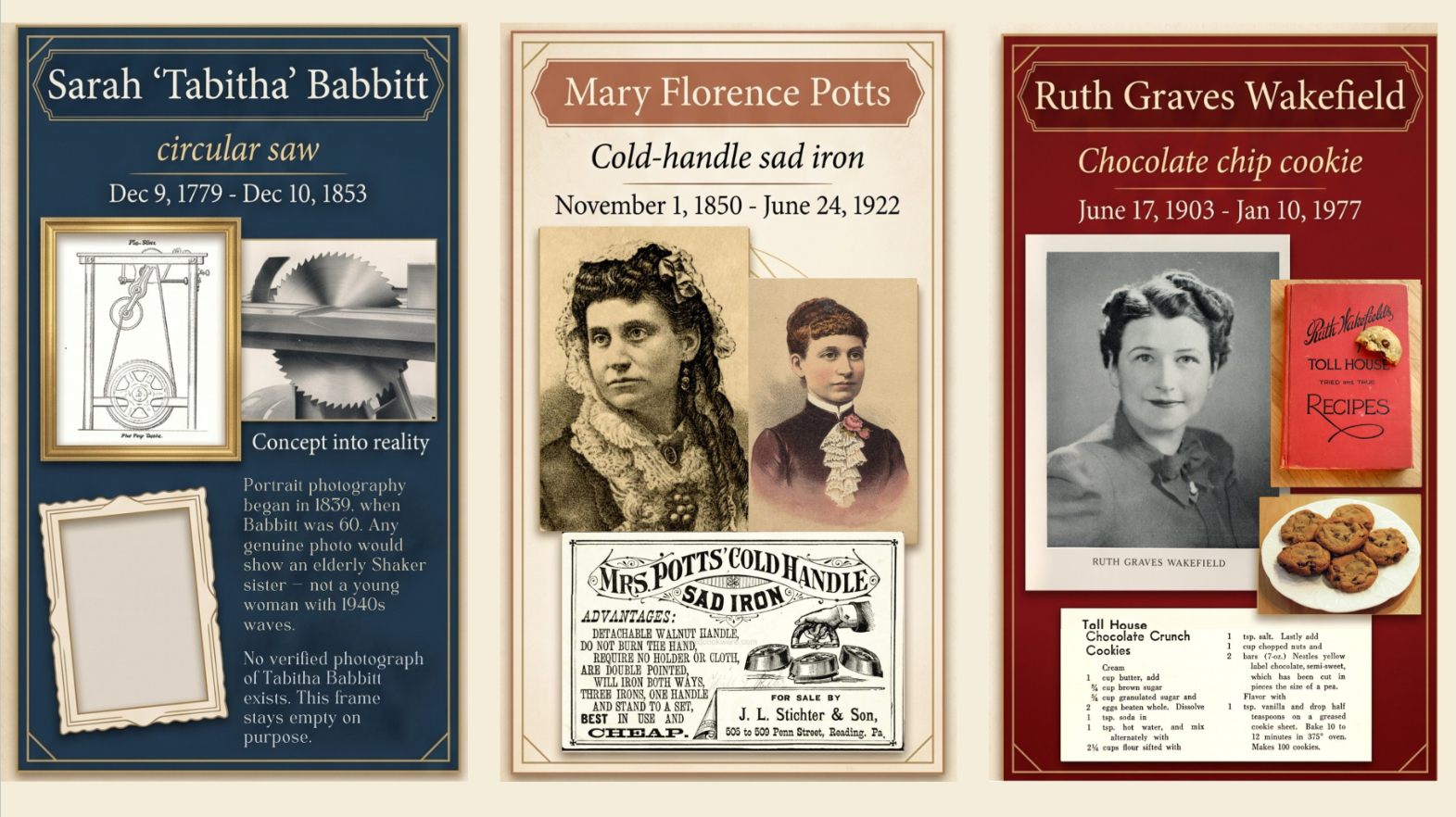
Hairstyles date images with surprising precision. Those rolled, brushed-back waves in the disputed portrait are unmistakably late-1930s to 1940s — exactly when Ruth Wakefield was famous. In 1939, she made her deal with Nestlé (the recipe and the Toll House name in exchange for one dollar and a lifetime supply of chocolate), and her cookie recipe has been printed on packages of Nestlé semi-sweet morsels ever since — it's still on the back of the yellow bag today. A Shaker sister like Babbitt, by contrast, would have worn her hair parted in the centre, pulled flat, and covered with a cap. The hairstyle alone tells you this photograph belongs to the cookie era, not the circular saw era.
Mary Florence Potts is the third woman caught in the tangle, so let's be specific in the search and add her name. Doing that surfaces another lesson: even an institution like the Harvard Historical Society presents Babbitt's circular saw as a settled invention, with no mention that the attribution is disputed, a confident, authoritative source can still pass along a contested claim as fact. That's not a reason to dismiss it; it's a reason to keep checking.
Potts confirms the method from the other direction. She patented her cold-handle sad iron in 1870, at just nineteen, and her iron became one of the most popular and widely used flatirons of the late nineteenth century — manufactured and licensed in the United States and Europe, with advertising that featured her own portrait. Her image appeared on thousands of lithographed trade cards, the little collectible advertisements companies handed out by the boxful, each one signed "Yours truly, Mrs. Florence Potts." The cards show her with tightly frizzed bangs, a high collar, and a lace jabot: pure 1880s. The images of her that survive match the visual culture of her moment. The medium (printed lithograph), the fashion, and the dates all agree. When everything lines up like that, you can trust an image a little more.
The panic is older than the camera
Here's the part I keep coming back to: critical thinking didn't stop when AI was invented, and laziness didn't start there either.
The oldest surviving complaint about technology ruining our minds is about writing. In Plato's Phaedrus, written around 370 BCE, Socrates warns that the written word will "implant forgetfulness" in people's souls — that readers will rely on external marks instead of their own memory, and will seem to know much while actually knowing nothing. Swap "writing" for "AI" and you have this year's op-ed pages. The panic has been recycled for novels, radio, comic books, television, video games, and smartphones. The psychologist Amy Orben calls it the Sisyphean cycle of technology panics: each generation pushes the same boulder of worry up the same hill, the predicted catastrophe fails to arrive, and then a new technology appears, and the boulder rolls back down. (Regular readers will recognize Orben from my earlier writing on AI in education — her framework keeps earning its keep.)
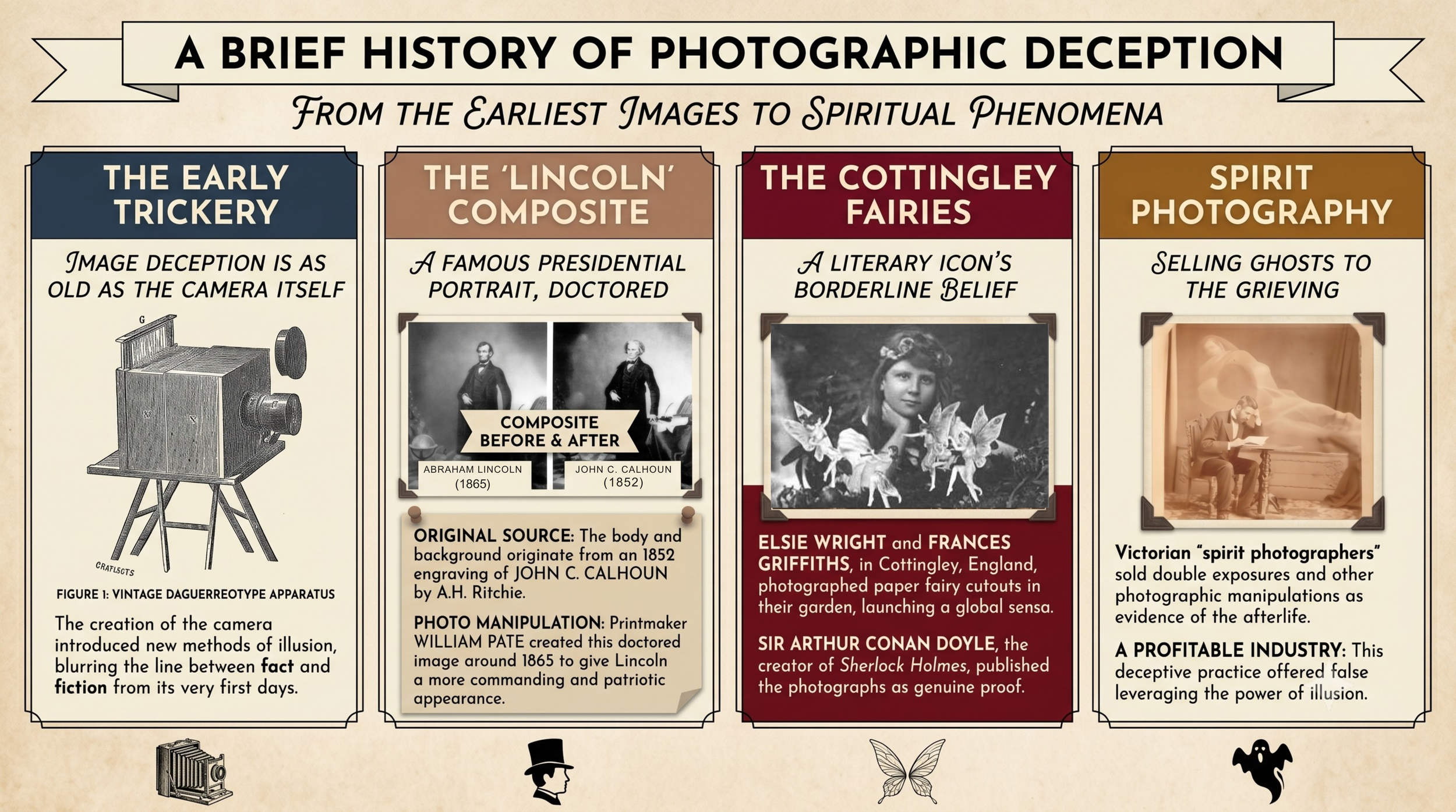
And image deception, specifically, has been with us almost as long as the camera itself.
The near-iconic standing portrait of Abraham Lincoln is a composite from the 1860s — Lincoln's head on the politician John Calhoun's body, made because no sufficiently heroic portrait of Lincoln existed.
Victorian "spirit photographers" sold double exposures as evidence of ghosts.
In 1917, two young cousins - Elsie Wright and Frances Griffiths in Cottingley, England photographed paper fairy cutouts in their garden, and Sir Arthur Conan Doyle — the man who invented Sherlock Holmes — published the fairy photographs as proof that fairies were real.
By the 1930s, Stalin's retouchers were routinely airbrushing executed colleagues out of official photographs, editing the historical record one enemy at a time.
People believed all of it. Not because the fakes were perfect, but because nobody asked where the image came from. The credulity is the constant; only the tooling changes. Anyone who says AI invented either deception or intellectual laziness hasn't met the Cottingley fairy photographs.
What the research says actually works
If the problem is old, so is the good news: asking better questions is a teachable skill, and there's solid research to prove it.
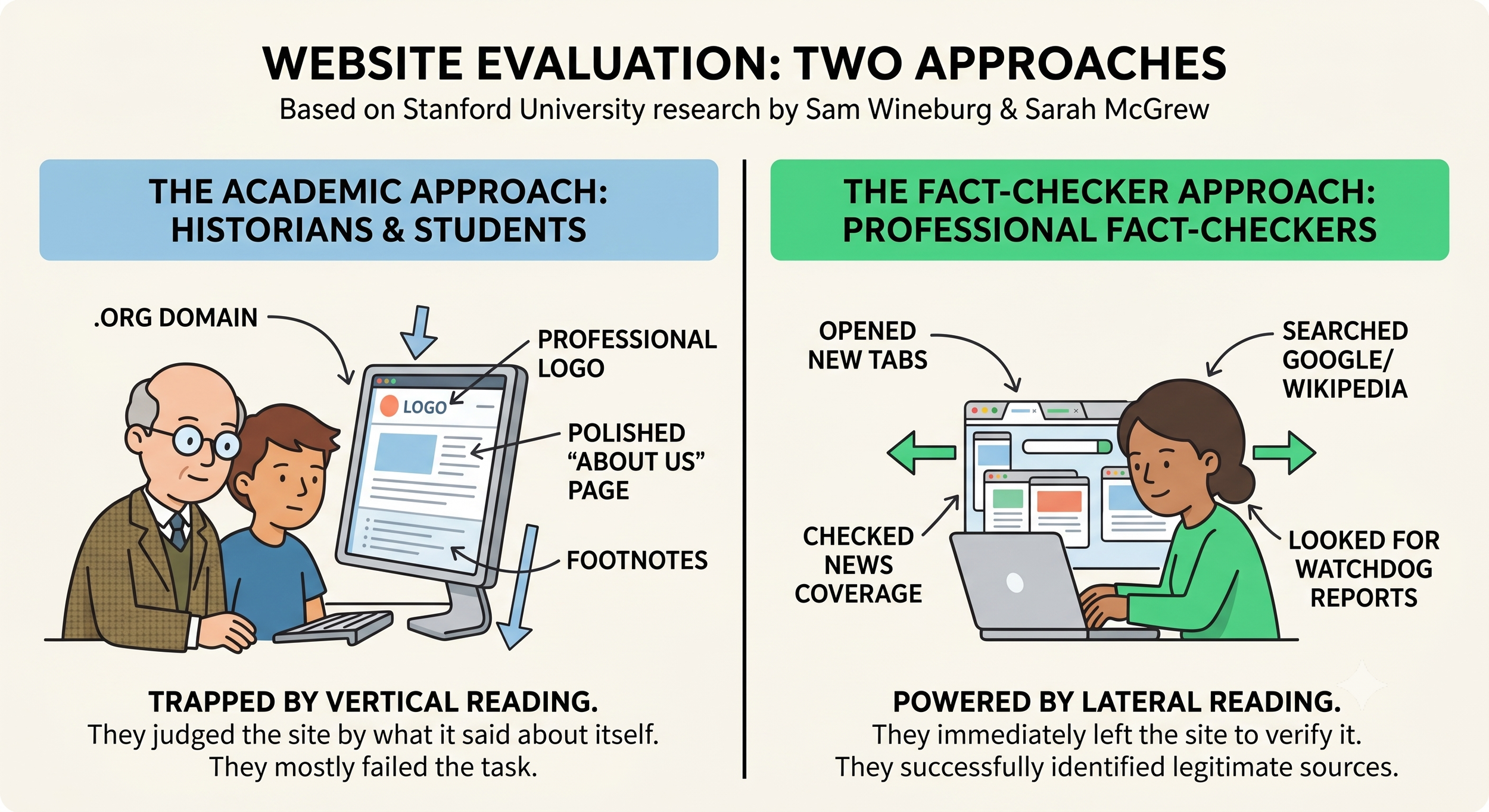
In a now-famous series of Stanford studies, researchers Sam Wineburg and Sarah McGrew gave website-evaluation tasks to three groups: PhD historians, Stanford undergraduates, and professional fact-checkers. The historians and students mostly failed. They read what the researchers call vertically — meaning they stayed on the website itself and scrolled up and down it, judging credibility by what the site said about itself: the professional logo, the ".org" domain, the polished About page, the footnoted articles. Everything they used to form a judgment was supplied by the very source they were trying to evaluate.
The fact-checkers did something different. They read laterally— meaning they left the website almost immediately. Within seconds, they had opened new browser tabs and searched for what other sources said about the organization: news coverage, Wikipedia, watchdog groups, and anyone independent. They moved sideways across the web instead of downward through a single site. In one task, every single fact-checker correctly identified a legitimate medical organization over a cloaked advocacy group with a similar name; only half the historians and a fifth of the Stanford students managed the same.
Sit with that for a second. Smart, highly educated people — pre-AI (or at least widely used ai)— fooled by a nice logo. Intelligence wasn't the variable. The method of evaluation was. The historians had decades of training in analyzing sources, but they applied it inside the site, where everything was staged by the people who built it. The fact-checkers had a different habit: never judge a source by its own self-presentation; step outside and check it against the rest of the world. Same intelligence, different procedure, completely different results.
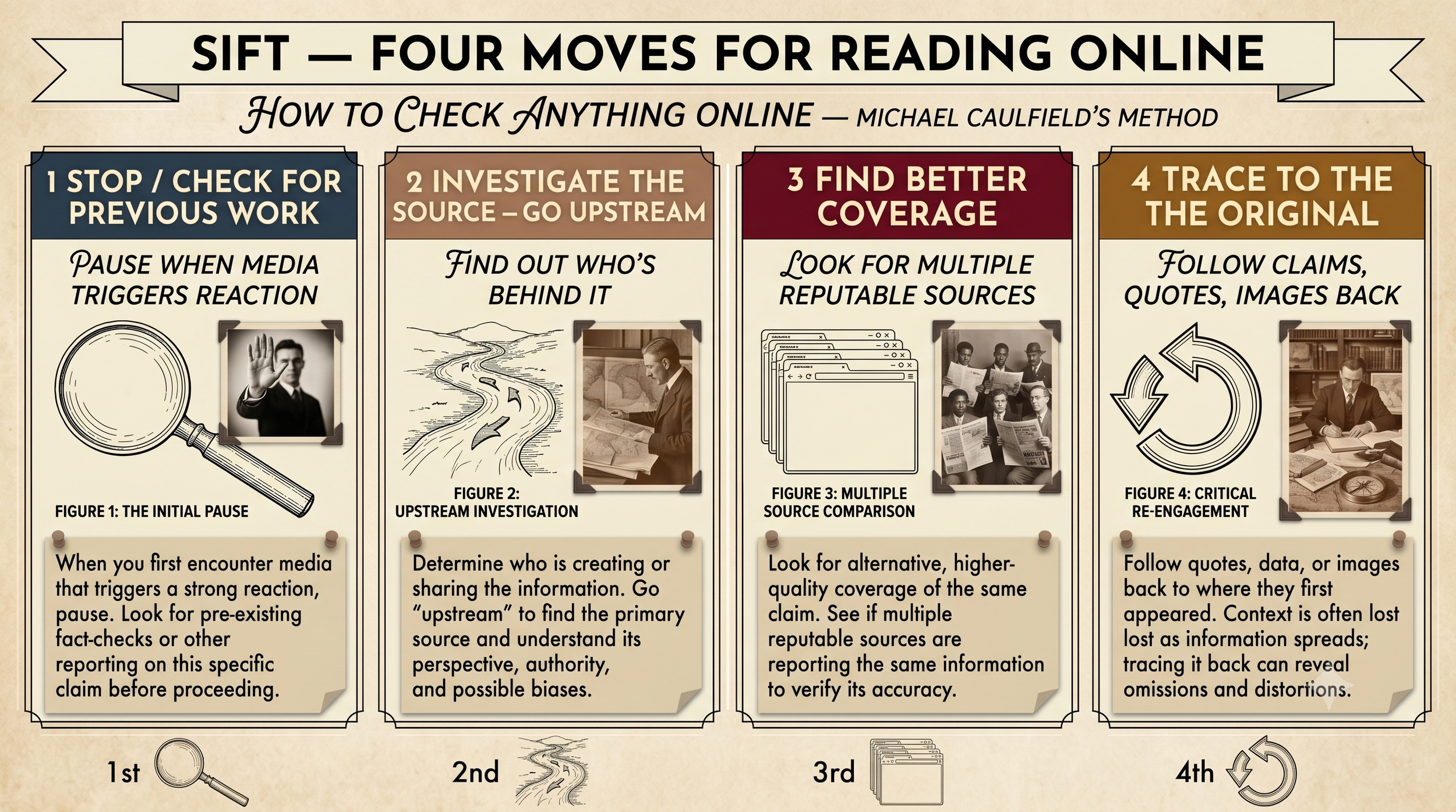
Better still, the method transfers. A follow-up field study in high school classrooms found that just two 75-minute lessons in lateral reading produced measurable improvement in students' ability to judge online content — still detectable a month later. Mike Caulfield distilled these habits into four moves for evaluating anything you find online:
Stop and check for previous work. Before doing your own investigation, see if someone else has. Fact-checking sites, Internet Archive (a recent favorite of mine), Wikipedia, and debunking databases have often already traced the claim or the image. Don't re-solve a solved case.
Investigate the source. Most of what we see online is a repost of a repost. Follow the chain backward to wherever the claim or image first appeared — the original study, the original archive, the original photo — and evaluate that, not the tenth-hand version. This is exactly what we were doing with the reverse image search: pushing past the Pinterest pins toward the museum scan.
Find better coverage. Once you reach a source, don't judge it by its own website. Open new tabs and find out what independent sources say about it. Who runs it? Who funds it? What's its track record?
Trace claims. If you hit a dead end or realize your first search terms were loaded with someone else's framing, stop and start over with better questions. Getting stuck isn't failure; it's information.
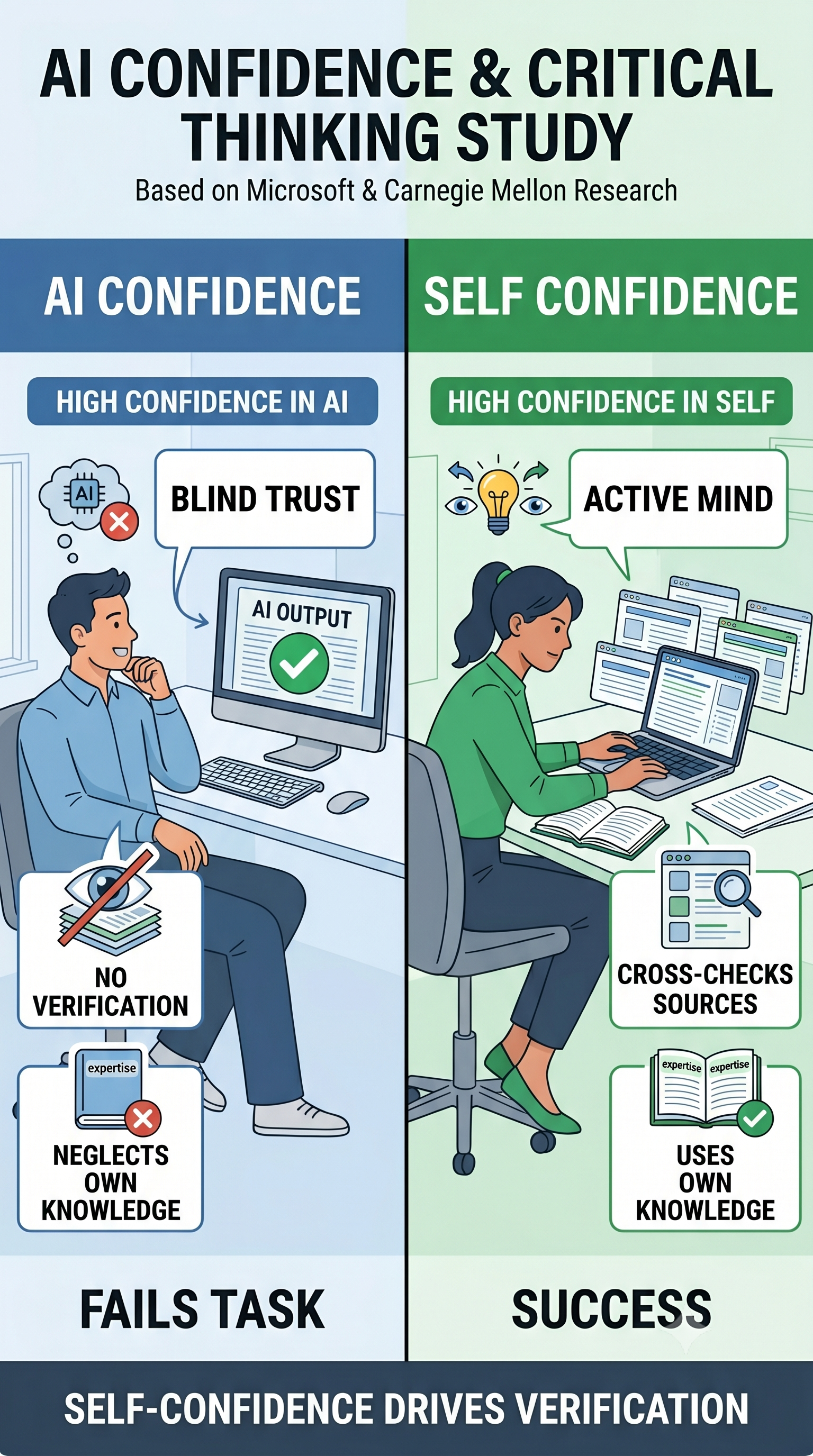
Even the research that gets headlined as "AI is destroying critical thinking" says something more precise. A 2025 Microsoft and Carnegie Mellon study of 319 knowledge workers found that people with high confidence in the AI thought less critically about its outputs — but people with high confidence in themselves thought more critically, verifying outputs against other sources and their own expertise. I will say, though, that the understanding of AI being a black box has really helped me use AI differently. From 2025 - 2026, I have realized more and more how much sources matter. This is AI Literacy.
The tool didn't switch anyone's brain off. Uncritical trust did. It's the Cottingley fairy photographs all over again — Arthur Conan Doyle believed two schoolgirls' fairy photographs because he wanted them to be true and never checked. A century later, an office worker accepts an AI summary without verifying it for exactly the same reason. The technology changed; the unasked question didn't.
That's the heart of it, I think. The lazy were lazy before AI. The intentional stay intentional with it. The variable that matters — in 370 BCE, in 1917, and now — is whether you keep asking questions.
One last forward glance: the industry is now building provenance infrastructure to help. The C2PA standard — short for Coalition for Content Provenance and Authenticity, an alliance that includes Adobe, Google, Microsoft, and major camera makers — defines something called Content Credentials. Think of it as a nutrition label for images. When a camera, an editing program, or an AI generator supports the standard, it attaches a secure, tamper-evident record to the file itself: this image was captured on this camera on this date, then cropped in this software, then had AI editing applied here. Anyone viewing the image can open that label and see its history, and Google's "About this image" can already surface it in search results. If someone strips the label off or alters it, that breaks the seal — which is itself a signal.
It will help. But notice what even this technology can and can't do. The label can tell you an image came straight from a camera; it can't tell you whether what the camera photographed was staged. The Cottingley fairy photographs, remember, were genuine, unedited photographs — of paper cutouts. Even the C2PA's own documentation is careful to say the standard doesn't declare anything true or false; it only shows you the trail and leaves the judgment to you. The hints get better; the asking never goes away.
What I actually want students to learn
The assignment was never really about cookies, saws, and irons. It was about building a reflex — and I mean that in the driver's-ed sense. Checking your blind spot isn't instinct; nobody is born doing it. It's a deliberate procedure you practise until it becomes automatic, until not doing it feels wrong. That's what I want verification to become for my students: a practised way of thinking that fires on its own, so that the pause and the questions happen before belief does, not after.
The questions themselves are simple. When you see an image attached to a claim, pause. Ask when cameras existed. Ask what the hair, the clothes, the printing technique say about the date. Run the reverse image search. Find the earliest posting. Look for the archive behind the screenshot.
None of this requires special access or expensive software. It requires the willingness to treat a picture as evidence rather than decoration — and a healthy suspicion of any portrait that looks a little too good for its century.
Ruth Wakefield deserves her face back. Tabitha Babbitt deserves her own story, engravings and all.
A coda: how this post was written
In the spirit of transparency — regular readers know I treat disclosure as a feature, not a confession — I wrote this post in conversation with AI. And it occurred to me partway through that the process itself was demonstrating the argument. So here's the verification labour, made visible.
I treated the AI's output as claims, not facts. When a draft asserted that the Toll House recipe was printed on Nestlé packaging, I asked directly: is that true, or did you make that up? It checked out — sourced to the Library of Congress, recipe on the bag since 1939. But when I questioned the claim that Mary Florence Potts had "one of the most widely printed faces in America," the verification came back softer than the sentence: her portrait appeared on thousands of trade cards, but the superlative was the AI's invention, not the archive's. One question confirmed a fact; the same question, asked again, caught an inflation. You don't know which you'll get until you ask.
I challenged the frame, not just the facts. The original title was about detective work. But the premise I actually wanted to push against was the idea that people were thinking critically until AI came along. I rejected that frame, and the title changed to follow the argument.
I refused to publish anything I couldn't explain myself. Where the draft used shorthand I couldn't unpack — a metaphor about lanyards, a casual "we have the receipts," terms like lateral reading dropped without definition — I stopped and made the AI explain or rewrite until I could defend every sentence as my own.
I cross-checked AI against AI. I ran the draft past a second AI for review. It was confident, complimentary — and partly wrong. It misread my Canadian spelling as inconsistency and asserted an unverified attribution for the Lincoln composite as settled fact. A polished, authoritative review containing an unchecked claim, delivered to a post about unchecked claims: the lesson writes itself.
I brought my own research. The flat statement that no verified photograph of Tabitha Babbitt exists comes from my own searching, not the AI's. So does the Harvard Historical Society example — I went and read the page.
None of this was friction slowing the writing down. It was the writing. The tool drafted quickly; the thinking — the asking, the checking, the refusing — stayed where it has always lived. Which is the whole point of the post you just read.
References & further reading
Plato. Phaedrus (c. 370 BCE) — Socrates's critique of writing and memory.
Orben, A. (2020). "The Sisyphean Cycle of Technology Panics." Perspectives on Psychological Science, 15(5), 1143–1157.
Wineburg, S., & McGrew, S. (2019). "Lateral Reading and the Nature of Expertise: Reading Less and Learning More When Evaluating Digital Information." Teachers College Record, 121(11).
Wineburg, S., Breakstone, J., McGrew, S., Smith, M. D., & Ortega, T. (2022). "Lateral Reading on the Open Internet: A District-Wide Field Study in High School Government Classes." Journal of Educational Psychology.
Caulfield, M. (2017). Web Literacy for Student Fact-Checkers (free open textbook; the basis of the SIFT method). Licensed CC-BY 4.0.
Lee, H.-P., Sarkar, A., Tankelevitch, L., Drosos, I., Rintel, S., Banks, R., & Wilson, N. (2025). "The Impact of Generative AI on Critical Thinking: Self-Reported Reductions in Cognitive Effort and Confidence Effects From a Survey of Knowledge Workers." Proceedings of CHI 2025, Microsoft Research / Carnegie Mellon University.
Farid, H. "Photo Fakery and Forensics." UC Berkeley — history of photographic deception, including the Lincoln–Calhoun composite, the Cottingley fairies, and Stalin-era airbrushing.
Harry Ransom Center, University of Texas — Niépce's "View from the Window at Le Gras" (1826/27), the first permanent photograph.
Legacy Tree Genealogists. "Genealogy Sleuthing: Using Women's Fashion to Date Old Photos."
University of Vermont Landscape Change Program — decade-by-decade guides to dating photographs by clothing, hats, and hairstyles, 1850s–1950s.
Coalition for Content Provenance and Authenticity (C2PA) — Content Credentials standard; Google, "How Google and the C2PA are increasing transparency for gen AI content."
Library of Congress, "Ruth Wakefield and Her Chocolate Crunch Cookie" — documentation of the recipe's spread and Nestlé's 1939–40 introduction of semi-sweet morsels with the recipe on the package.
The Henry Ford Museum, "Mrs. Potts, Inventor" — Potts's 1870 patent, the trade cards bearing her portrait, and the iron's manufacture and licensing in the United States and Europe.