Commercial Galleries vs. Art Museums
Written by Vanessa Corrigall, ChatGPT 5.2 + Perplexity AI
What Collectors Should Know
When people begin collecting art, it’s common to wonder why some work feels perfectly suited to a gallery, while other work feels especially at home in a museum.
Neither context is “better.”
They simply serve different roles — and understanding that difference can help collectors make more confident choices.
Commercial Galleries: Helping Art Find Homes
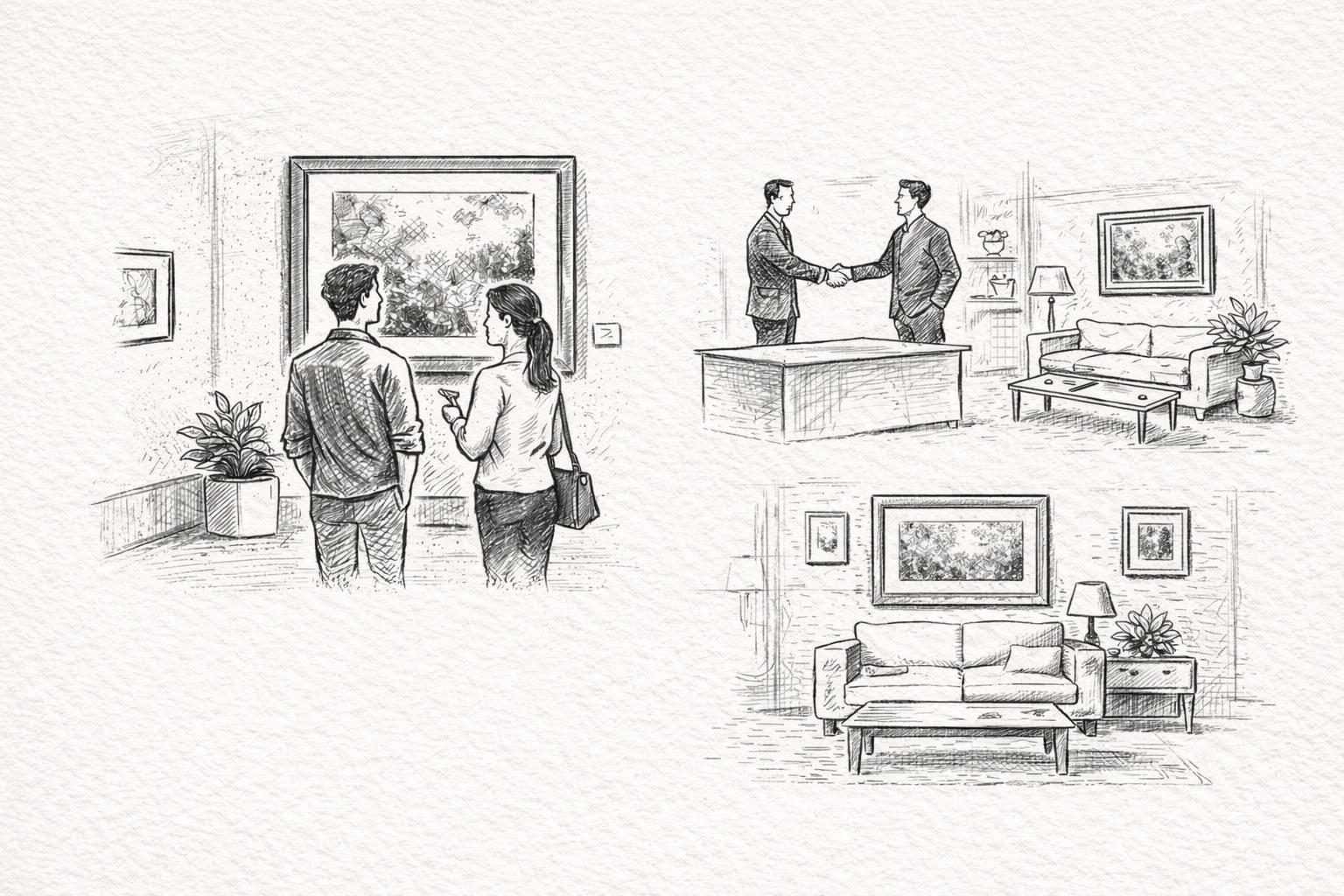
Commercial galleries are businesses that exist to connect artwork with collectors.
Their focus is on:
presenting work clearly
supporting artists through sales
helping people imagine living with a piece
Because of this, gallery spaces often prioritize work that:
reads well in a short encounter
feels complete on its own
makes sense without needing surrounding context
fits comfortably into everyday spaces
For collectors, this is often where relationships with artists begin. Gallery settings are designed to help you see how a single piece might live in your home.
Art Museums: Caring for Art Over Time
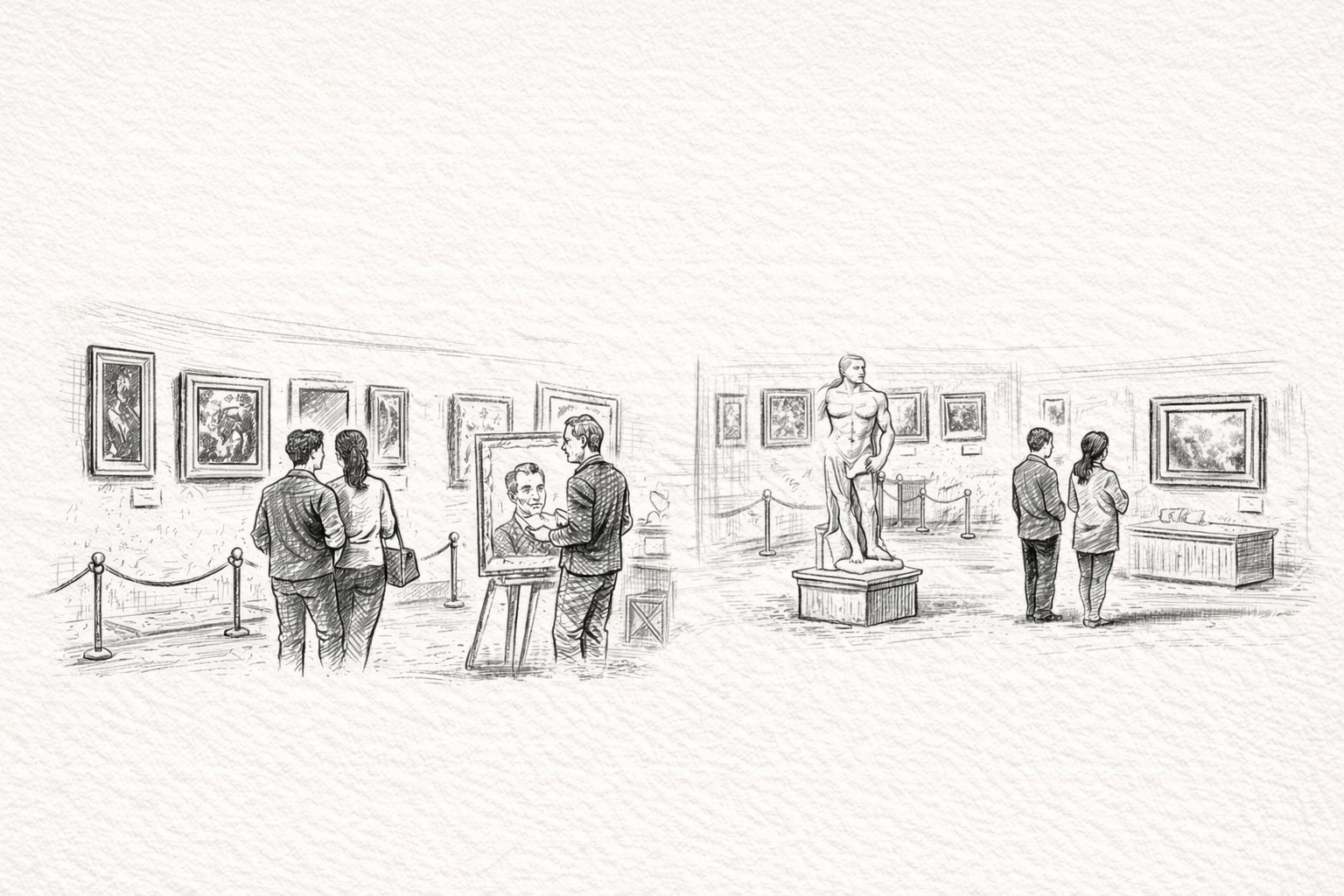
Art museums are usually public or non-profit institutions with a different responsibility.
Rather than sales, museums focus on:
long-term care
public access
historical and cultural context
Museums tend to look at:
bodies of work rather than individual pieces
how an artist’s practice develops over years
whether work continues to hold attention through repeated viewing
how pieces function together in a shared space
Museum contexts allow work to unfold slowly. They’re built for revisiting, not deciding.
Commercial Galleries vs. Art Museums
| Aspect | Commercial galleries | Art museums |
|---|---|---|
| Main role | Connect artists and collectors through sales. | Care for artworks as part of a public collection. |
| Funding / structure | For-profit businesses, earning commission on sales. | Usually non-profit, supported by public and private funding. |
| What you see | Individual works that stand alone and are available to buy. | Bodies of work shown together, often not for sale. |
| Timeframe | Helps you decide what you want to live with now. | Helps you see how work holds up over time. |
| Type of looking | Short, focused encounters with single pieces. | Slower looking and revisiting across multiple visits. |
| Your relationship | You can build ongoing relationships with artists and gallerists. | You build familiarity with artists and movements over many visits. |
Why This Matters for Collectors
A piece that works beautifully in a gallery often:
feels immediately engaging
stands confidently on its own
offers a clear sense of tone or mood
A piece that thrives in a museum setting often:
reveals more over time
benefits from being seen alongside related work
resists quick interpretation
stays active through repeated attention
Many collectors naturally gravitate toward both kinds of work over time. One isn’t more serious than the other. They simply ask for different kinds of looking.
A Helpful Way to Think About It
You might think of the difference like this:
Galleries help you decide what you want to live with.
Museums help you understand how art lives over time.
As a collector, noticing which works continue to stay with you — even after the initial excitement — can be a useful guide.
A Quiet Question to Ask Yourself
When considering a piece, it can help to ask:
Is this something I enjoy immediately, or something I want to spend time with?
Often, the most meaningful collections include both.
Why Artists Care About This Distinction
Artists often move between these contexts throughout their careers. Understanding the difference helps explain why:
some works are made to stand alone
others are part of a longer exploration
and why artists sometimes edit or group their work differently for different settings
For collectors, this awareness adds depth — not pressure — to the experience of collecting.
In Closing
Collecting art isn’t about choosing the “right” context. It’s about noticing what continues to matter to you.
Over time, as you pay attention to which works keep holding your interest, your collection begins to reflect your own way of seeing.