AI-Inspired Art: A New Movement Blending Technology and Traditional Painting
The art world is in a strange moment right now.
If you spend any time on Reddit or Instagram, you’ve probably seen the same comment pop up over and over:
“Is this AI?”
Artists are being asked to “prove” they painted their own work.
Collectors are unsure what’s handmade and what’s generated.
And the tools themselves—lightning fast, endlessly inventive—have blurred what “reference,” “interpretation,” and “originality” even mean.
But from all of this tension, something genuinely interesting is emerging.
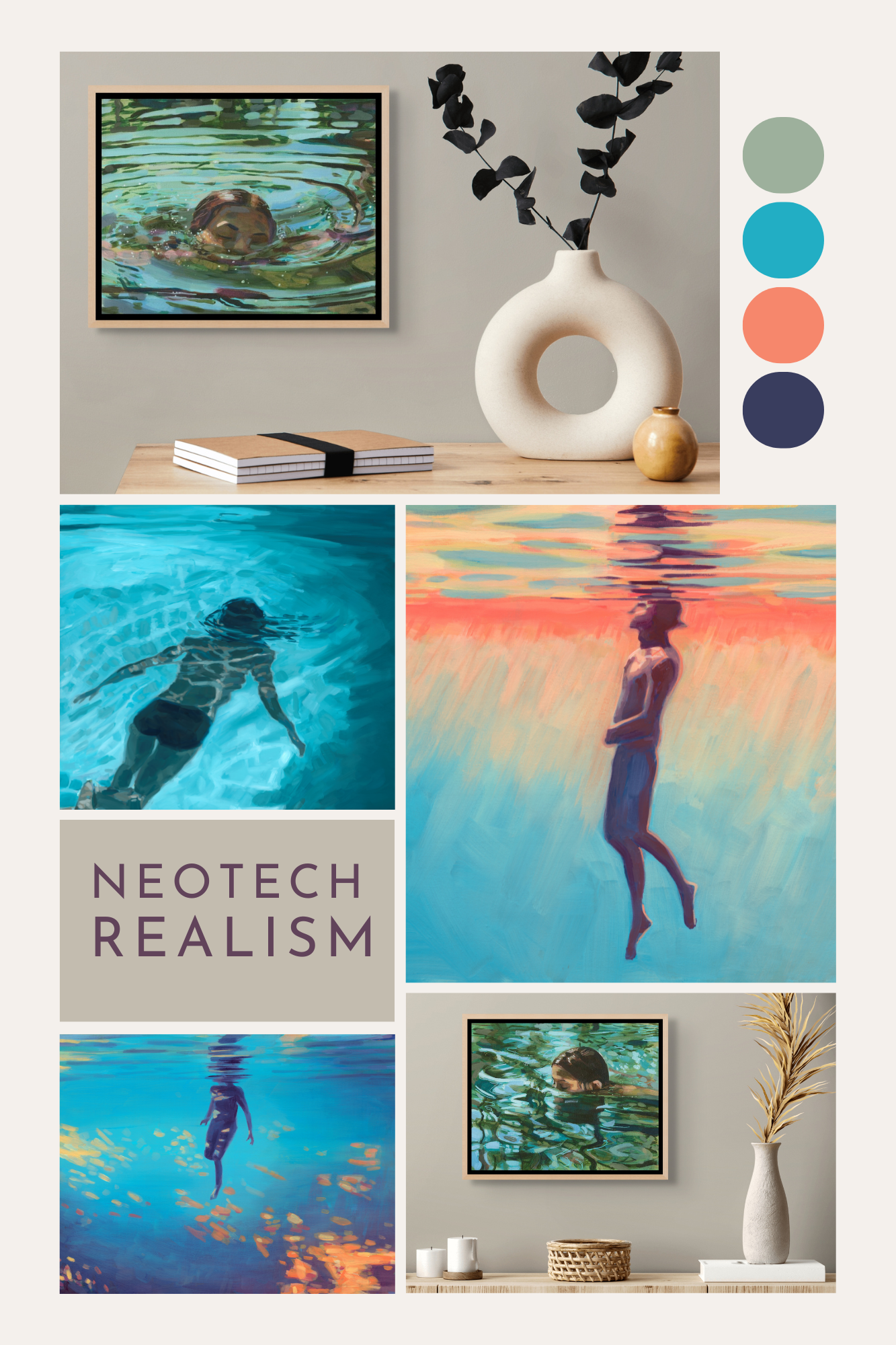
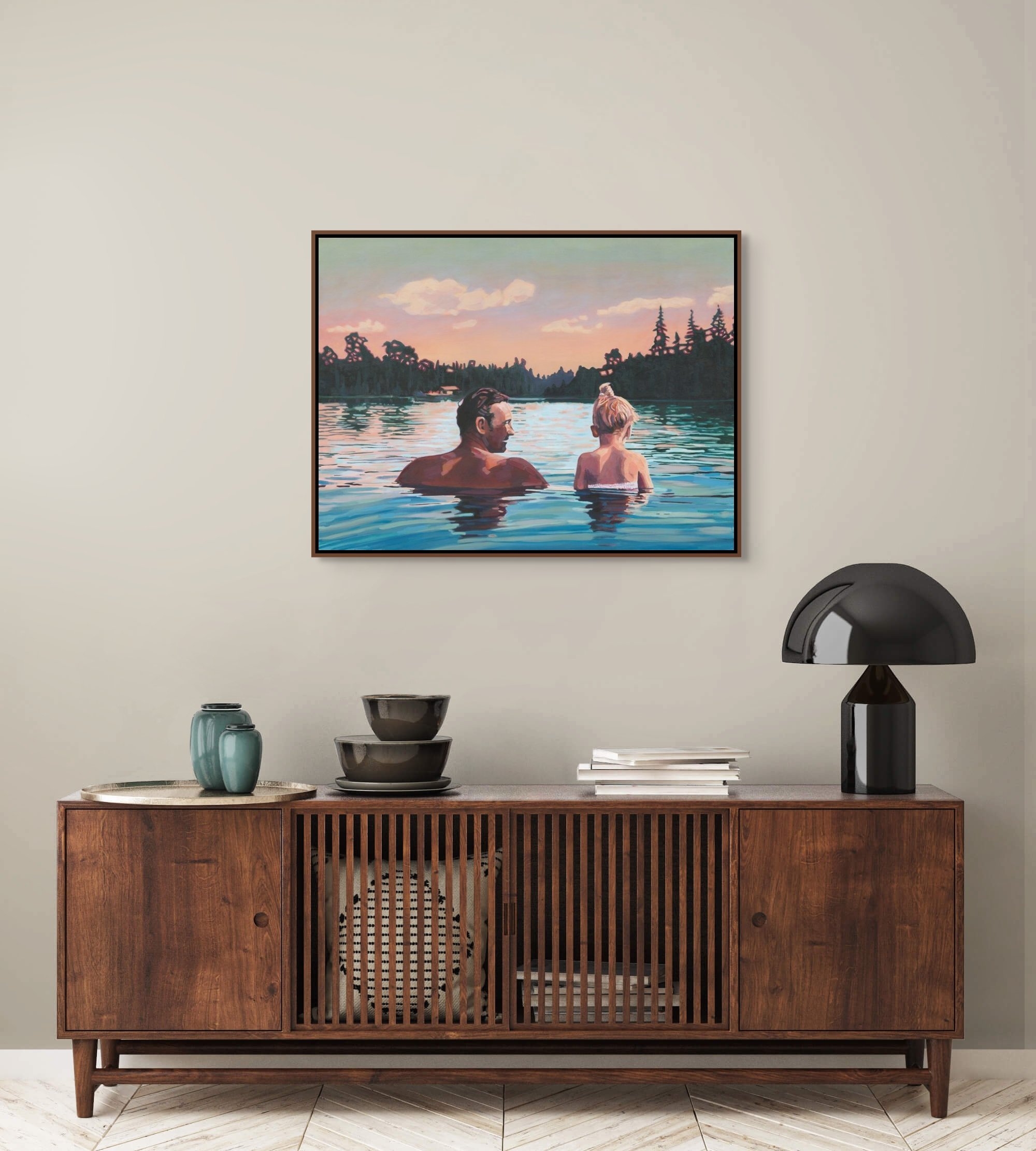
A new category of art is taking shape—one where the final artwork is fully hand-made, but the ideas, distortions, lighting, and compositions may begin with AI-generated references.
This hybrid approach deserves a name, and it deserves clarity.
I call it Neotech Realism.
What Is Neotech Realism?
Neotech Realism is an emerging movement where artists use AI-generated imagery as a reference, not a replacement. The artist still creates every brushstroke, every decision, every layer—but they use AI the way previous generations used:
photography
projectors
live models
collage
digital mockups
mood boards
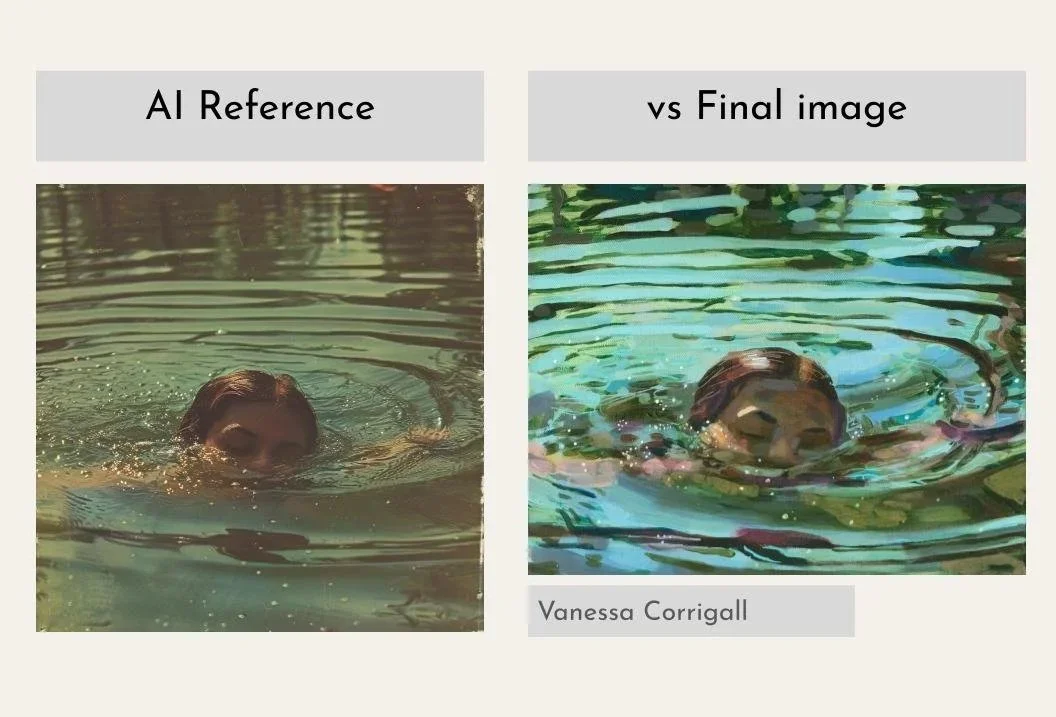
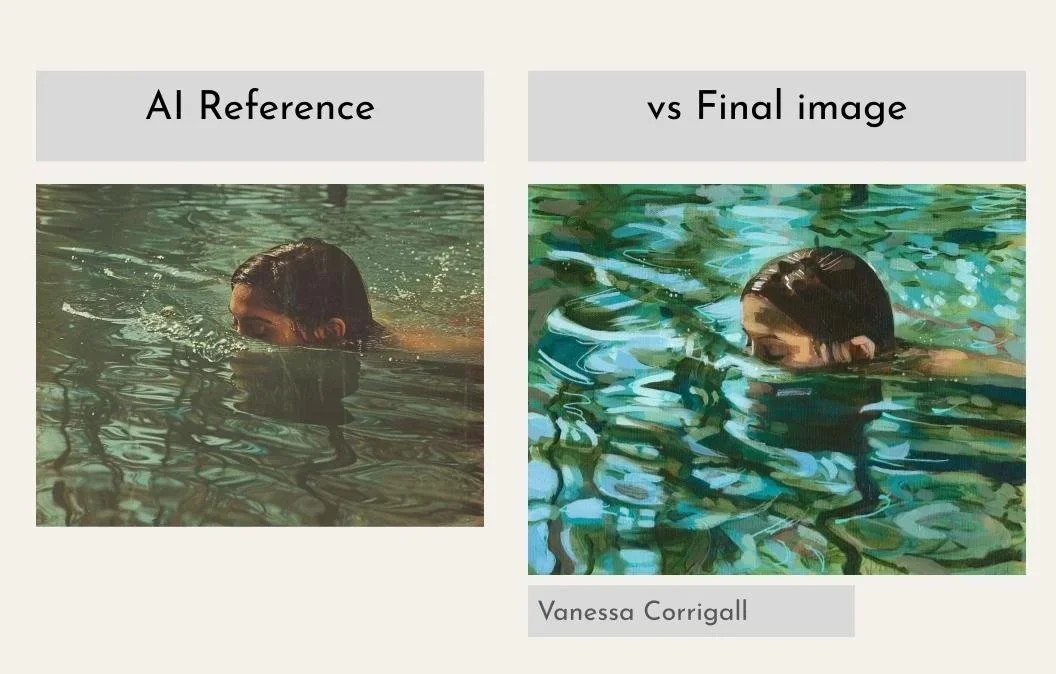
The AI reference is simply the spark, not the artwork.
Neotech Realism sits at the intersection of technology and traditional craft—something distinctly human built from a modern toolset.
How Neotech Realism Differs From AI-Generated Art
This is important for collectors, curators, and anyone trying to understand the difference.
AI-Generated Art Neotech Realism / AI-Inspired Art The image is the final product. The AI image is only a reference. Machine-created with no human hand in the artwork itself. Hand-painted, hand-drawn, or hand-built from start to finish. No physical surface unless printed. Exists physically—canvas, paper, panel, clay, etc. Fast to produce. Slow, physical, intentional process.
One is output.
The other is interpretation.
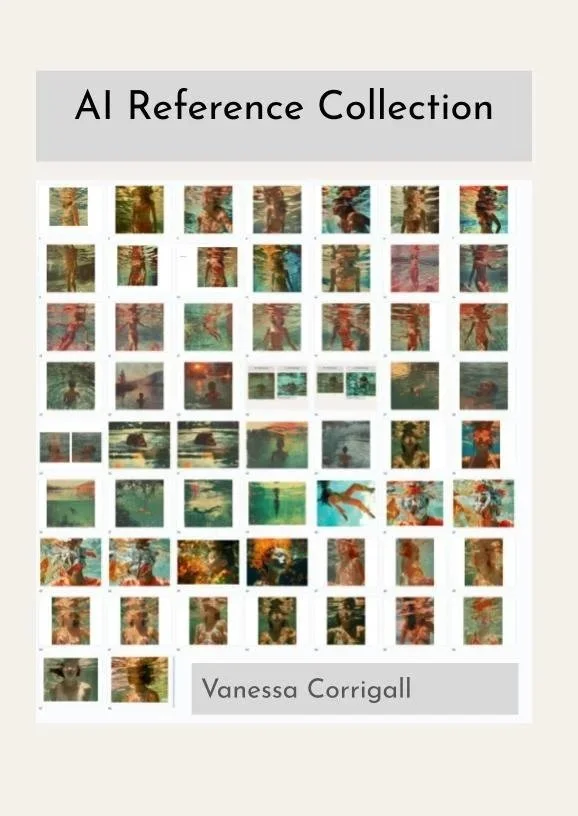
One of my AI Reference Collections
Why Artists Are Turning to AI References
AI is becoming part of the creative toolbox for reasons that are actually very practical:
• Faster idea generation
Instead of sketching 40 thumbnails, an artist can explore variations immediately.
• New visual possibilities
Unusual poses, surreal angles, lighting underwater—things that are difficult or impossible to photograph.
• Getting unstuck
AI breaks creative blocks by offering unexpected compositions.
• Exploration without pressure
Artists can try wild ideas without wasting materials.
It’s less “machine replacing the artist” and more “machine giving the artist new clay to shape.”
Why There’s So Much Skepticism Right Now
There’s a cultural shift happening—fast.
People online are now hyper-aware of AI, and sometimes suspicious of anything beautiful, smooth, or technically strong. That means artists often face assumptions like:
“This looks too perfect—it must be AI.”
“Prove you painted this.”
“Where’s your process video?”
This mistrust is understandable; AI tools have confused the landscape.
But it doesn’t mean hand-made art has disappeared.
It just means the language around art needs to evolve.
How Collectors Can Understand (and Appreciate) This Movement
For collectors, the value remains exactly where it has always been:
in the artist’s interpretation, their skill, their emotion, their choices, and their physical craft.
A Neotech Realist artwork offers something unique:
1. A record of this cultural moment
We are living through a major technological shift. Art that reflects this moment will only gain historical interest.
2. A human hand responding to machine-generated imagery
It becomes a dialogue between the artist’s intuition and the machine’s unpredictability.
3. Transparency and trust
Artists who openly share their process are building stronger collector relationships.
4. A one-of-a-kind physical object
Even if AI helped shape the idea, the painting only exists once.
A collector isn’t buying pixels—they’re buying the human transformation of those pixels into something that lives and breathes.
Ethical Considerations (Handled Thoughtfully)
Like any tool, AI requires responsibility.
Neotech Realist artists are increasingly careful about:
transforming references rather than copying
maintaining transparency about their process
ensuring the final work is fully human-made
This is not “AI art.”
It is art that acknowledges AI as part of our visual culture.
Where Neotech Realism Might Be Going
This movement is still forming, but here are likely future directions:
Galleries creating categories for AI-assisted traditional work
Artists documenting their process more thoroughly
Collectors becoming early adopters of hybrid creative practices
Schools teaching AI as part of the reference toolkit
A broader cultural acceptance of AI as a muse, not a threat
Just as photography once disrupted painting—and eventually became part of it—AI will settle into its place.
And the artists who embrace it thoughtfully will help define that place.
Final Thoughts
Neotech Realism isn’t about machines painting for us.
It’s about artists exploring a new way of seeing.
It’s about curiosity, not shortcuts.
Intention, not automation.
Craft, not replacement.
AI may offer the spark, but the artist brings the fire.