Studio Renovation Update: Building a Dedicated Art Space in My Basement - Month III
Creating a dedicated art studio is one of the most important investments an artist can make—not just for workflow and creativity, but for collectors who want to know where and how the artwork they bring home is created. Over the last few weeks, the renovation of my basement studio has picked up momentum, and I’m excited to share the progress.
A Clean Slate for a Working Artist’s Studio
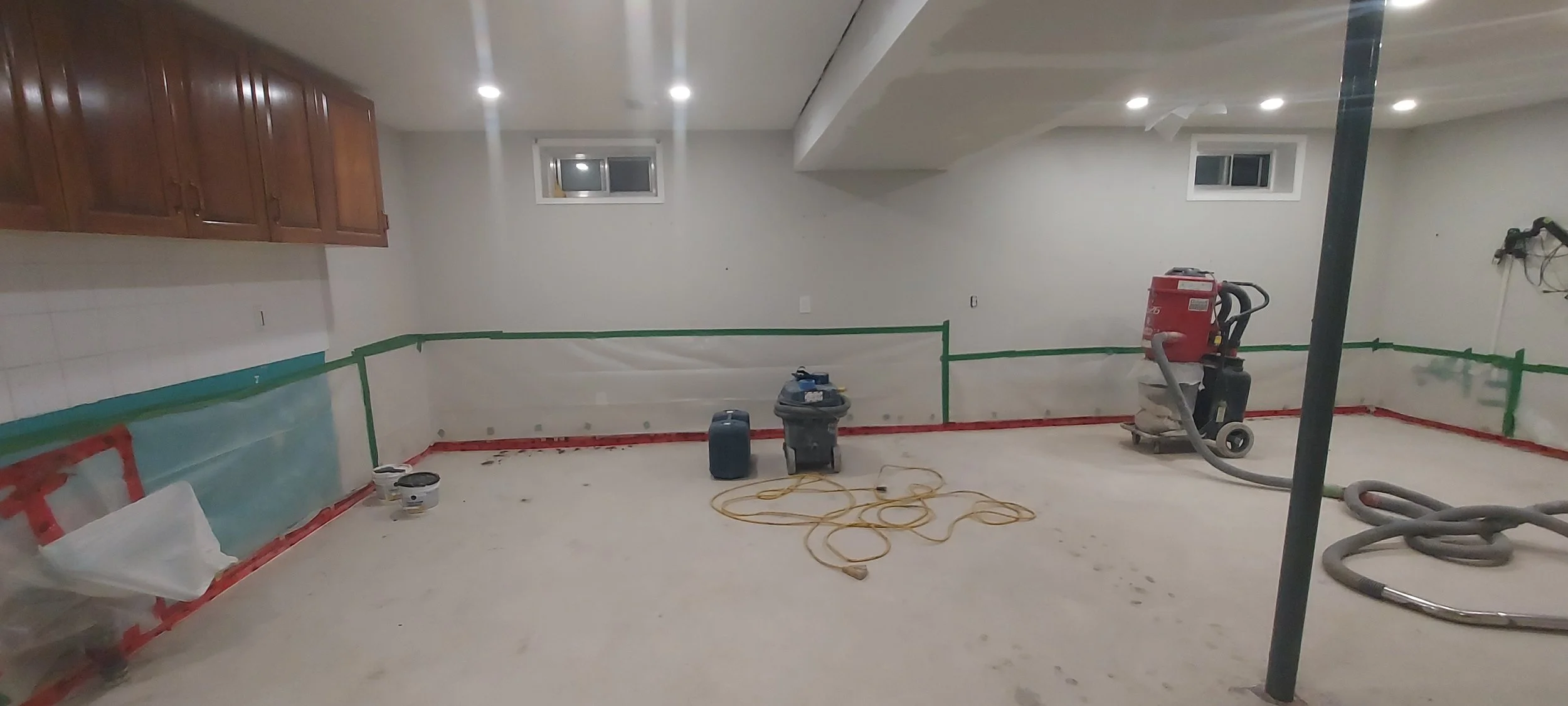
The evening after grinding of the floor
This month, the Floor Doctors came in to tackle one of the biggest challenges: removing the old layers of carpet glue and tile grout on the concrete floor. They used a full industrial grinder to get everything down to clean, bare cement—something I’ve wanted for years. A smooth foundation matters, especially for a studio that needs to handle oversized canvases, paint spills, water, and constant movement.
Next week, they’ll begin two separate leveling pours to even out the entire space. Once that cures, we’ll finally have a true, level surface—ideal for rolling carts, drying racks, easels, and filming equipment.
For collectors who follow my work, this renovation is part of a larger commitment: creating a professional workspace designed specifically for my underwater swimmer paintings and future projects. A dedicated studio means more consistency, more production flow, and a space that supports larger-scale work.
Searching for the Perfect Studio Floor
I’ve been collecting flooring samples for months, trying to find the right mix of durability, practicality, and aesthetics. I originally thought I’d go with an epoxy finish, but the company I consulted only offered high-gloss epoxy, and that’s not the look I’m aiming for.
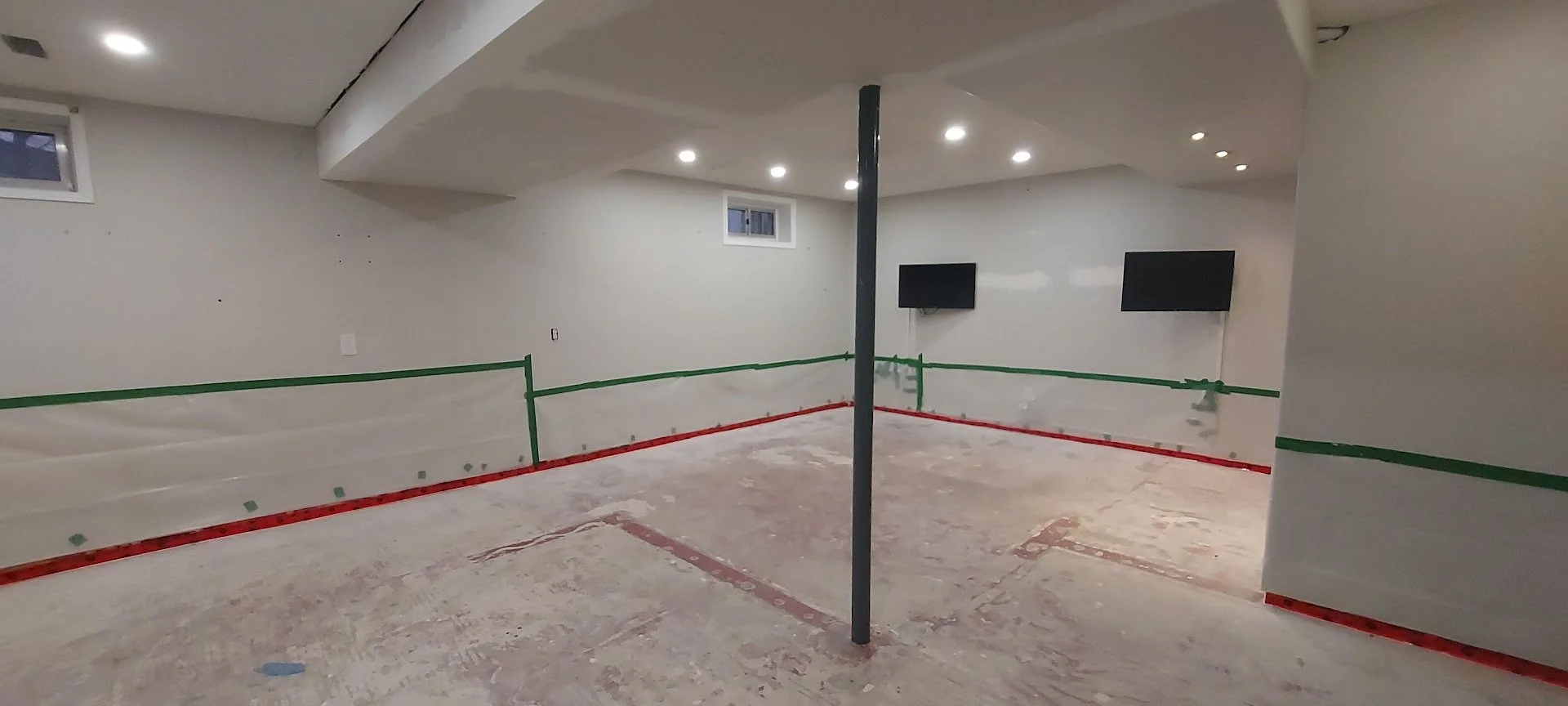
Photo of my studio space, unfinished floors and greyish walls
High gloss is beautiful in garages and showrooms, but for a working art studio, a softer, more natural finish works better. It reduces glare when photographing artwork, is easier on the eyes when painting for hours, and just feels more grounded.
So the search continues. I’m taking my time because the studio floor is something I’ll live with every day, and collectors often get to see it in behind-the-scenes footage, process videos, and studio visits.
Why Studio Space Matters to Art Collectors
Collectors today don’t just want art—they want connection, story, and a sense of where the work comes from. A professional studio shows:
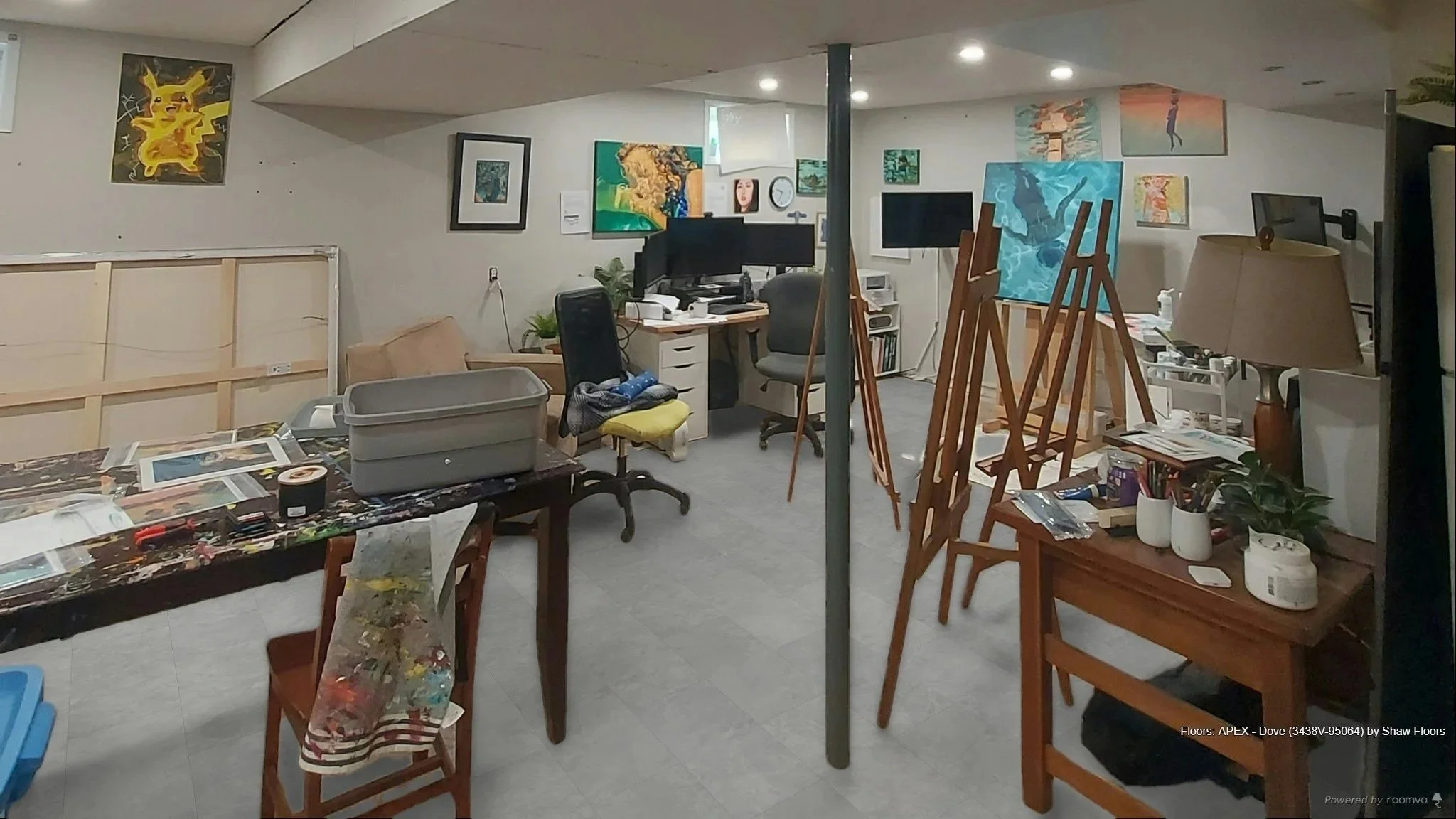
Possible flooring for the studio?
dedication to the craft
long-term artistic vision
a place designed specifically for creating original artwork
stability and consistency in production
an environment where high-quality work can flourish
Studio transparency builds trust.
And trust builds a stronger relationship between artists and collectors.
As the basement transforms into a fully functioning art studio—leveled floors, new lighting, organized storage, and room to grow—I’m looking forward to inviting collectors into a space that truly reflects the heart of my practice.
More floor samples will arrive this week, and I’ll keep sharing updates as the studio comes together.
If you’re an art collector who loves seeing the behind-the-scenes of an artist’s process, this floor renovation is just the beginning.