AI Art and Ethical Collecting: How Collectors Can Think Clearly About AI
Article written by Vanessa Corrigall + ChatGPT 5.2
Introduction: Why the AI Art Conversation Feels So Loud
If you collect contemporary art, you’ve probably noticed how quickly conversations about AI escalate.
Opinions are strong. Emotions run high. Social platforms reward certainty and outrage. Artists are navigating real pressure, and collectors are left trying to separate genuine concern from noise.
But volume doesn’t equal clarity.
AI hasn’t overturned the foundations of ethical art collecting. What it has done is bring long-standing questions into sharper focus — authorship, labor, intention, transparency, and power. These questions were already there. The tools simply made them harder to ignore.
This guide isn’t about persuasion or panic. It’s about clarity. If you care about collecting thoughtfully — even as technology changes — you already have what you need.
Why Conversations About AI Art So Often Break Down
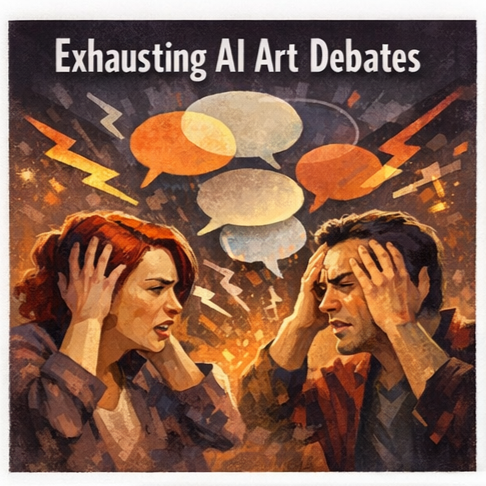
AI art debates tend to collapse quickly, and not because the issues are simple.
A few patterns show up again and again:
Binary thinking
Real vs fake. Human vs machine. Artist vs algorithm. These frames flatten nuance and shut down meaningful discussion.
Emotional overload
For artists already dealing with precarity and visibility challenges, AI can feel like an existential threat. That emotional weight spills into public conversations.
Platform amplification
Social media rewards speed, certainty, and outrage — not careful thinking. The loudest voices travel farthest.
Collectors get caught in the middle
When every take sounds urgent, slowing down to look carefully at the work becomes harder.
Thoughtful collecting isn’t about winning arguments. It’s about asking better questions — and giving yourself time to answer them.
How Ethical Galleries Already Approach AI-Assisted Art
Despite the noise, most ethical galleries aren’t scrambling to reinvent their standards.
They’re doing what they’ve always done: applying established curatorial principles to new tools.
Photography, digital media, video, and conceptual art all faced similar skepticism when they emerged. Over time, the art world adapted by focusing less on tools and more on intention, coherence, and care.
Tools Change. Standards Don’t.
Ethical galleries still ask:
Is the artist intentional?
Is the work coherent within a broader practice?
Is the process transparent?
Will the work hold up over time?
AI doesn’t bypass these questions. If anything, it intensifies them.
What Ethical Galleries Look For
Intent and authorship
AI doesn’t erase the artist. It makes authorship more visible. Curators want to understand who made the work and why specific choices were made.
Coherence of practice
Is the work connected to an ongoing inquiry, or is it a detached experiment chasing novelty? Consistency matters.
Transparency of process
Ethical galleries expect honesty about tools and decisions. This doesn’t require technical jargon — just clarity.
Conceptual depth and longevity
Hype fades quickly. Work grounded in real inquiry tends to last.
Respect for artists and audiences
Ethics extend beyond the artwork itself. Galleries that care about fair contracts and responsible representation apply those values consistently — including to AI-assisted work.
AI is not a shortcut to the gallery wall. In many cases, it slows the process, demanding more reflection, not less.
Five Questions Collectors Can Use to Evaluate AI-Assisted Art
Instead of asking whether a work “counts” as art, collectors can rely on the same instincts they already use — applied with clarity.
These are the same questions ethical galleries ask, translated into collector language.
1. Who Made This — and Why?
AI is a tool. The artist is still making decisions: what to generate, what to discard, what to refine, and how to contextualize the result.
Ask:
Does the artist explain their choices clearly?
Does the work connect to a larger body of work or inquiry?
Strong authorship makes the technology recede into the background.
2. Was This Made Ethically?
Ethical work is transparent and respectful.
Ask:
Is the process explained honestly?
Are influences acknowledged?
Does the artist demonstrate care around consent, sourcing, and attribution?
Collectors don’t need to solve copyright law. Supporting artists who act with integrity is enough.
3. Does This Support a Sustainable Practice?
Ethical collecting looks beyond novelty.
Ask:
Is the artist building a long-term practice or chasing a trend?
Do they show consistency and growth over time?
Are they aligned with ethical galleries or professional standards?
Your purchases shape what survives. Choose work that’s meant to last.
4. Who Controls the Tools?
This question is often overlooked — and increasingly important.
Ask:
Is the artist aware of the platforms and systems they’re using?
Are they making intentional choices, or defaulting to convenience?
Agency matters. Art shaped by reflection tends to age better than art shaped by speed.
5. Will This Still Matter in Five Years?
Volume isn’t value. More images don’t mean more meaning.
Ask:
Does the work reward sustained attention?
Is there depth beneath the surface?
Would you want to live with this work over time?
Good collecting is about building resonance, not chasing drops.
AI Clarifies Collecting
Periods of technological change tend to make values more visible.
As tools become more accessible, what matters most in art collecting rises to the surface:
Meaning
Care
Intentionality
Technical polish is easier to achieve than ever. Depth is not.
Work created with attention, reflection, and coherence stands out more clearly against a backdrop of speed and volume. Work made purely for novelty tends to fade.
This moment rewards collectors who slow down, ask thoughtful questions, and trust their instincts.
A Simple Checklist for Ethical Collecting
Before purchasing AI-assisted art, ask:
Who made this?
Why was it made this way?
Is the process transparent?
Does it fit the artist’s broader practice?
Will this still matter in five years?
If the answers feel grounded and consistent, you’re likely on solid ground.
Final Thoughts: Collecting With Confidence in a Changing Art World
Ethical art collecting has always been about care, curiosity, and attention.
AI hasn’t changed that. It’s simply made thoughtful collecting more visible, and more necessary.
In a culture driven by speed and noise, clarity becomes a quiet advantage. Collect work that reflects intention, supports sustainable practices, and continues to speak long after the trend cycle moves on.
That’s how meaningful collections are built — regardless of the technology involved.