A Practical Guide for Collectors
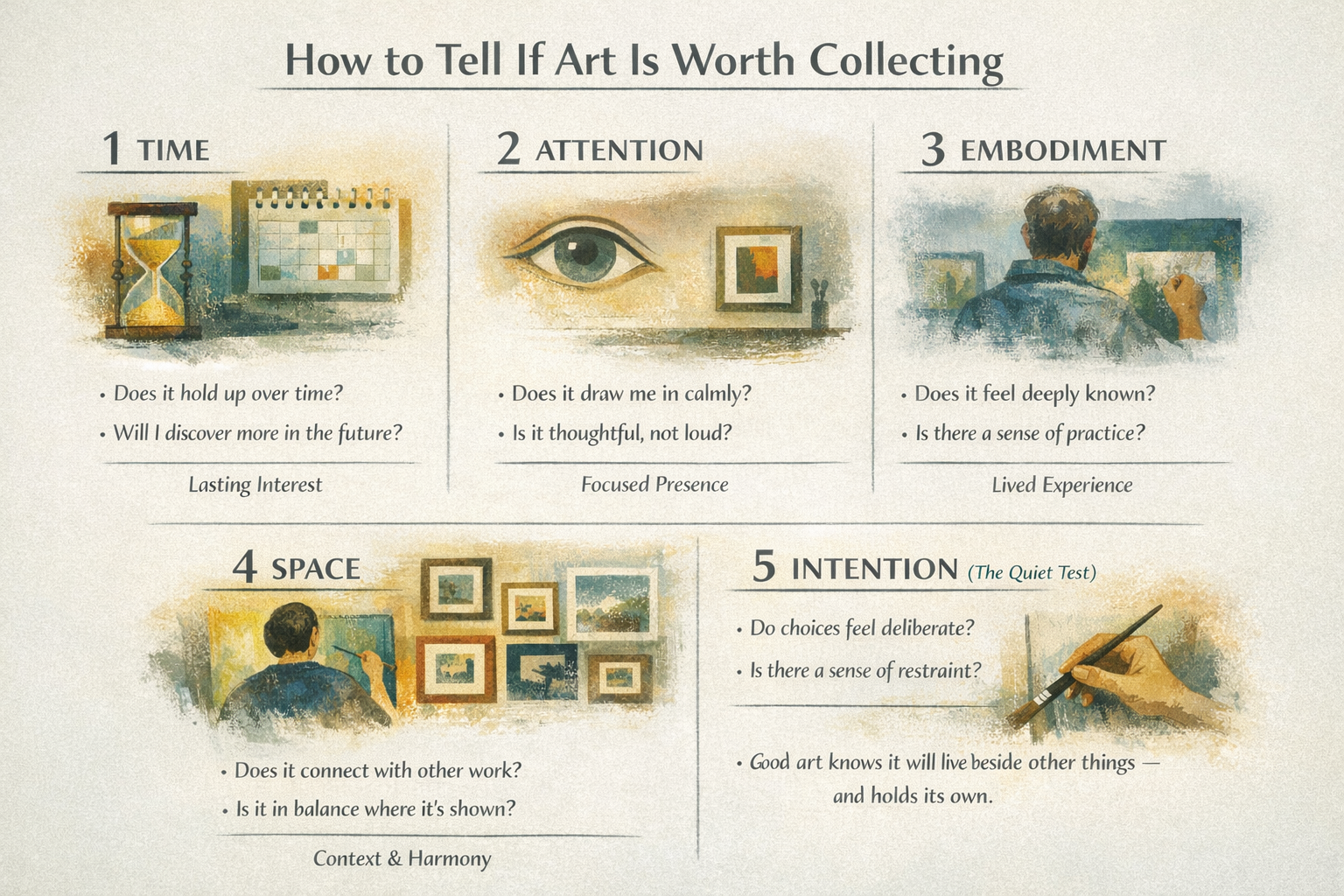
How to Tell If a Piece of Art Is “Good” — Especially Online or at Art Walks
First: Redefining “Good Art”
“Good” art isn’t about:
technical perfection
realism
popularity
price
Good art is work that:
holds attention
deepens with time
feels intentional rather than accidental
belongs to a larger way of working
The questions below help you sense that.
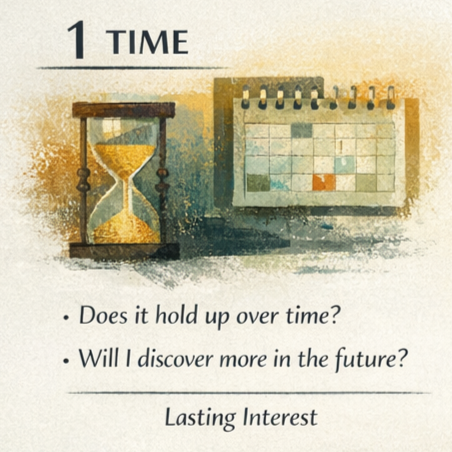
1. TIME
Will this hold over time — or is it a quick hit?
Ask yourself:
Do I still find this interesting after looking away and returning?
Does it feel like part of a longer exploration, not a one-off image?
Can I imagine noticing new things in it months or years from now?
Online tip:
Scroll past it.
If it pulls you back without trying to, that matters.
Market tip:
Walk the full loop, then notice which works stay in your mind.
Good art often works slowly, not instantly.
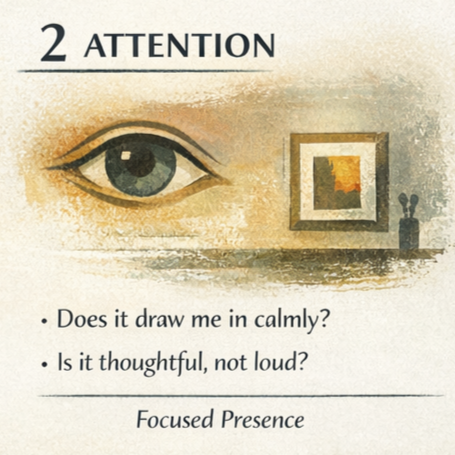
2. ATTENTION
How does this piece ask for my attention?
Ask yourself:
Does this feel calm, confident, and grounded?
Is it shouting for attention — or quietly holding it?
Does it leave room for me to think, or does it tell me what to feel?
Online tip:
Be cautious of work that relies only on shock, novelty, or trend-driven visuals.
Ask: Would this still work without the algorithm?
Market tip:
Notice which booths feel busy vs. which feel settled.
Calm is often a sign of control.
Good art doesn’t rush you. It doesn’t explain itself immediately.
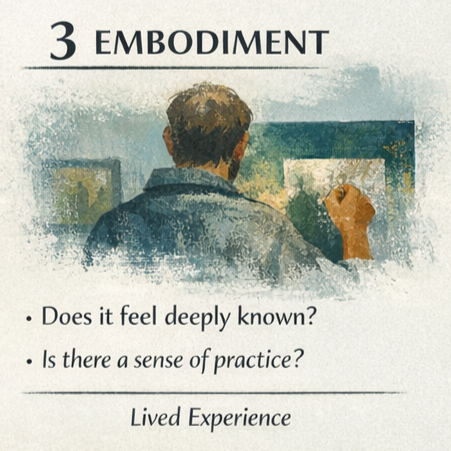
3. EMBODIMENT
Does this feel lived-in or performed?
Ask yourself:
Does this feel like the artist knows this subject deeply?
Does it feel observed from the inside, not just depicted from the outside?
Can I sense repetition, practice, or commitment behind it?
Online tip:
Look at the artist’s body of work, not just one post.
Are they returning to something again and again?
Market tip:
Ask the artist how long they’ve been working with this subject.
Depth often reveals itself in how simply they answer.
Good art usually comes from doing, not illustrating.
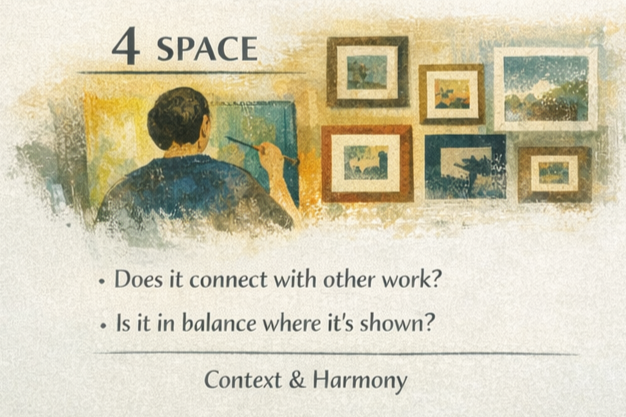
4. SPACE
How does this work relate to other work?
Ask yourself:
Does this feel connected to the artist’s other pieces?
If I hung this at home, would it still feel complete on its own?
Does it feel like part of a conversation, not a standalone decoration?
Online tip:
View the artist’s grid or gallery page as a whole.
Does the work feel cohesive without being repetitive?
Market tip:
Notice how pieces are grouped or spaced.
Artists who think about placement usually think about meaning.
Good art knows it will live beside other things — and holds its own.
5. INTENTION (The Quiet Test)
Does this feel intentional?
This is often the deciding factor.
Ask yourself:
Do the choices feel deliberate?
Does nothing feel random, rushed, or overworked?
Can I sense restraint — knowing when to stop?
Good art doesn’t feel like it’s trying to impress you.
It feels like it knows what it’s doing.
One Final Question (The Most Important One)
Would I want to live with this — not just look at it?
Living with art means:
noticing it on ordinary days
letting it fade into the background and reappear
allowing it to become part of your rhythm
That’s where the difference between liking something and collecting something lives.
A Gentle Reframe for Collectors
You don’t need to ask:
“Is this important art?”
A better question is:
“Does this continue to meet me where I am?”
That’s often what museums, curators, and long-term collectors are actually paying attention to — whether they say so or not.